How Ethical Is Swimming With Dolphins In Kaikoura?
A balanced look at the ethics of swimming with dolphins in Kaikoura: the DOC rules, the dusky dolphin rest period, and how the day trips that bundle the dolphin boat actually work.
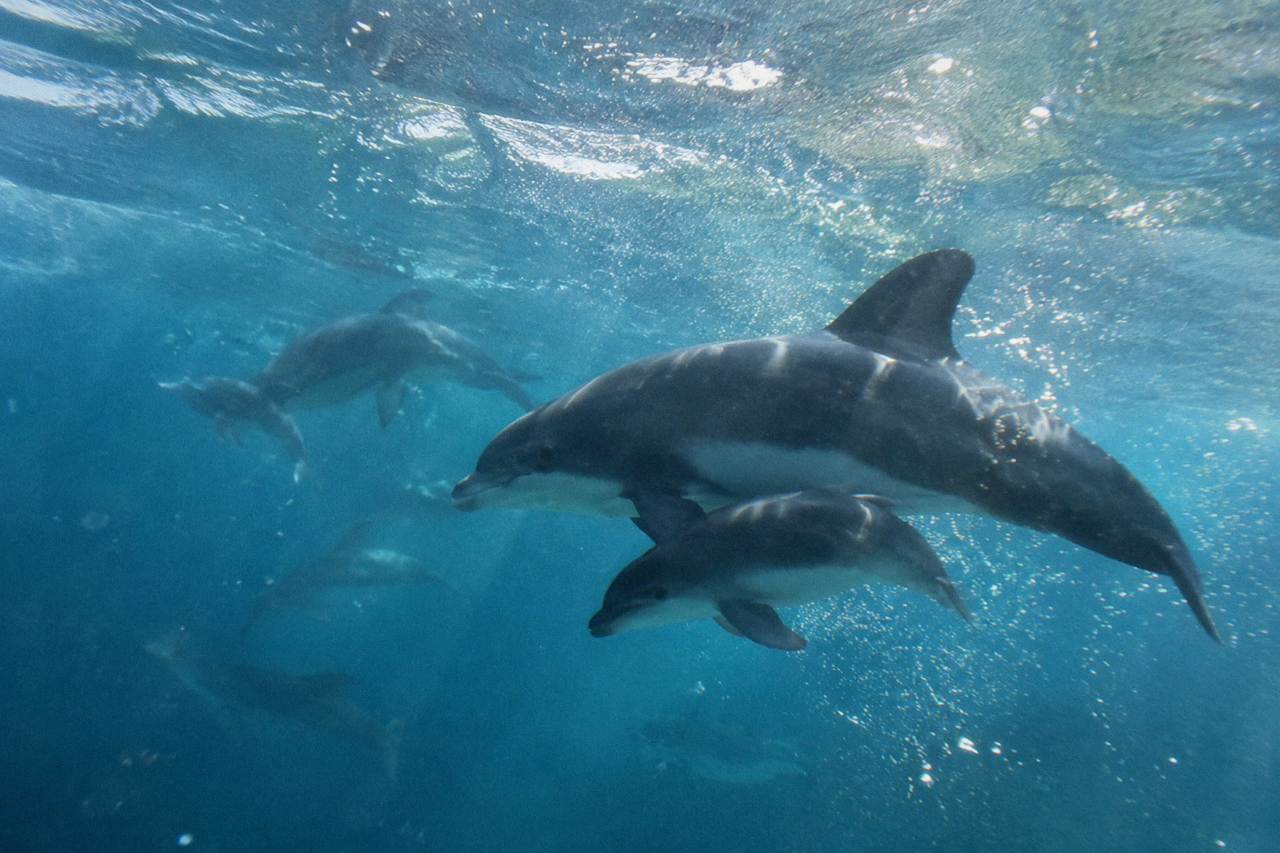
Dusky dolphins are present at Kaikoura all year round. The Department of Conservation (DOC) describes groups of several hundred to over 1000 animals in the waters off the peninsula, one of the reasons this stretch of coast has become a centre for dolphin tours. Swimming with wild dolphins is legal in New Zealand, and it is regulated rather than banned, which is exactly why the ethics question is worth asking carefully instead of answering with a slogan.
This page looks at the question the way a visitor to Kaikoura actually faces it. Every bookable dolphin product covered here is a Christchurch day trip or a two-day package that bundles the Kaikoura dolphin boat; the boat operator itself sells direct only. So the decision an ethics-minded reader makes is not whether to swim, in the abstract. It is which Kaikoura dolphin tour to book, on what terms, and whether a watching format is the better fit.
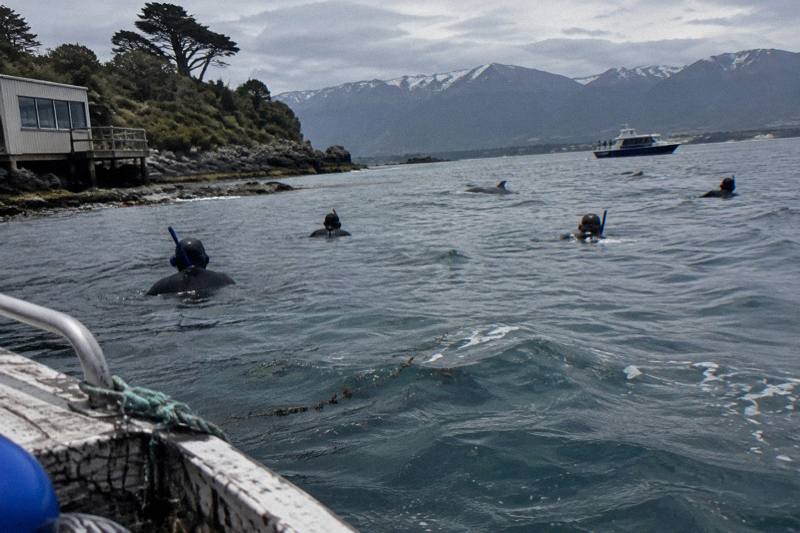
Swimming with dolphins at Kaikoura sits in a regulated middle ground: it is legal, it is licensed, and it operates under DOC rules designed to limit disturbance, but it is contact tourism with wild animals and no sighting is guaranteed on any tour. DOC says its management at Kaikoura focuses on limiting tourism impacts, and swimmers must not enter dolphin pods with very young calves. Watching is the lower-contact option on the same waters.
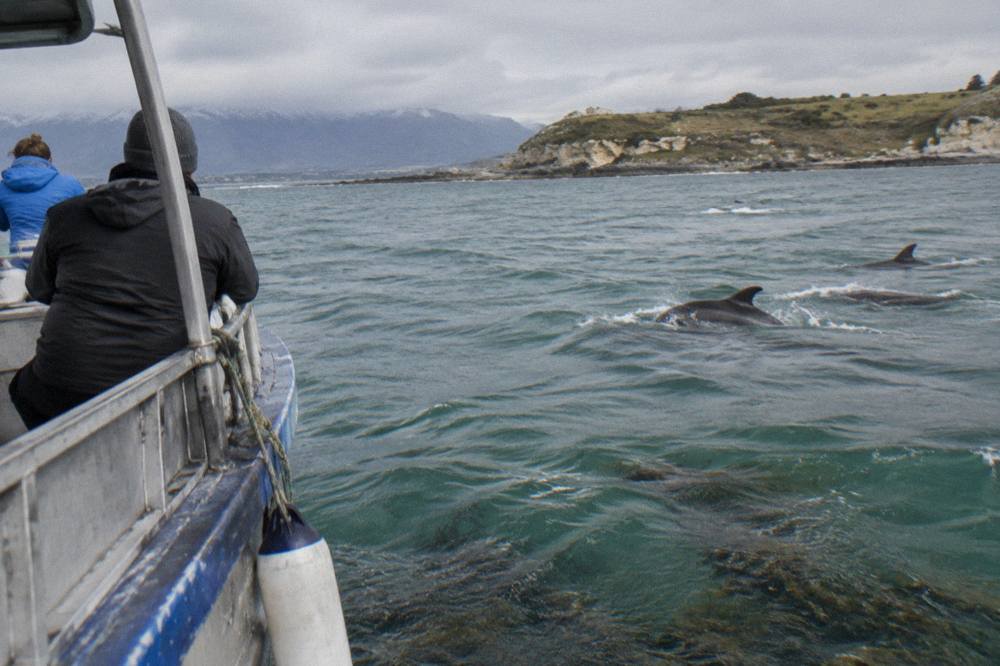
The honest answer is that the ethics depend on things a reader can actually check. Who holds the permit, what rules the swim follows, how the animals are approached, and what happens when conditions or calf presence change the plan. New Zealand's Marine Mammals Protection Regulations 1992 set the frame: boats must travel at idle or no-wake speed within 300 m of any marine mammal, they must approach dolphins from behind and to the side rather than circling or cutting through a group, and no more than three vessels or aircraft may be within 300 m of any marine mammal at once. Swimmers may not enter the water with dolphin pods that have very young calves.
Those rules matter because they answer the strongest version of the animal-welfare objection. A swim here is not a free-for-all in a pod of animals. It is a permitted activity inside a rule set written to reduce harm, policed under the Marine Mammals Protection Act 1978, in a place where DOC explicitly says it manages tourism around the dolphins with the aim of limiting impacts.
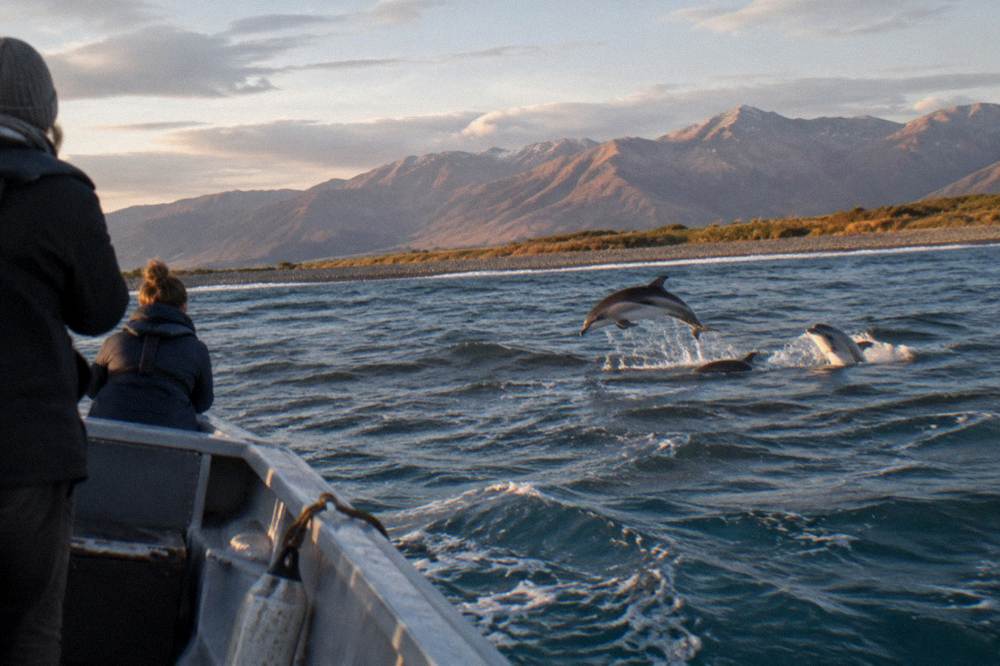
That does not settle the question, and it should not. A reader who believes wild animals should never be part of a paid tourist activity will not be persuaded by a licensing scheme, and that position deserves respect rather than a rebuttal. What the rules do establish is the difference between Kaikoura and the unregulated swim encounters found in parts of the world where dolphins are fed, chased or penned. The Kaikoura model is wild, rule-bound and cancellable: if the dolphins have young calves, the swim does not happen.
The three day trips above are the formats an ethics-minded reader actually chooses between: the 12-hour swim day trip from Christchurch, from $283.14 per person with hotel pickup and wetsuit included; the Dolphin Encounter watch day trip at from $217 per person, which keeps you on the boat; and the luxury small-group swim tour at from $592.95, capped at eight guests. The full comparison, including the watch-only choice, is in the guide to Kaikoura dolphin swim versus dolphin watch.
What Do The DOC Rules Actually Say About Swimming With Dolphins?
The 1992 regulations allow swimming with dolphins but ban it with pods that have very young calves, cap boats at three within 300 m of any marine mammal, require idle or no-wake speed inside 300 m, and set approach angles from behind and to the side. Swimming with whales is not permitted at all. Breaches carry penalties under the 1978 Act.
Reading the rules as a whole, a pattern emerges: everything is built around the animal's terms, not the swimmer's. Boats may not circle a group or cut through it. Aircraft, including drones, must stay more than 150 m away. Whales get 50 m of space, 200 m when a large mother and calf pair is present. The regulations set no minimum age, swimming ability or swimmer count; those are operator terms, which is why they differ from tour to tour on this site.
For a swimmer, the in-water guidance recorded from the Kaikoura dolphin boat operator is similarly specific: do not touch the dolphins, keep arms at your sides, and be aware that noises through the snorkel can attract the animals. None of this guarantees the dolphins are undisturbed, but it does mean the encounter is shaped by a rule book rather than by whatever a boat crew feels like doing that morning.
The 12-hour swim day trip from Christchurch, the most reviewed dolphin product covered here at 4.5 across 29 reviews, states that swimmers must be confident swimmers and can swim up to 50 m from the boat, with a minimum age of 8 and a group capped at 16. Those are the operator's own terms layered on top of the DOC frame. Lunch is excluded on that tour; wetsuit and snorkel gear are included.
Does A Dolphin Swim Disturb The Kaikoura Pod?
It can, which is why the activity is licensed and rule-bound rather than open. DOC says its management at Kaikoura focuses on limiting tourism impacts on the duskies, and the rules exist precisely because boats and swimmers change how a pod feeds, rests and moves. The strongest protections are the calf ban, the three-vessel cap and the rest period.
The dusky dolphins at Kaikoura are the species the tours are built around. DOC describes them as present all year, moving further offshore in winter, with calving from November to mid-January, which is also the window when swimming with a pod is barred if very young calves are present. The dolphin boat operator says that from October to May the dolphins move inshore in the early morning to the southern side of the peninsula, and from June to September they range further offshore over a wider area. Tour routes follow the animals rather than a fixed course.
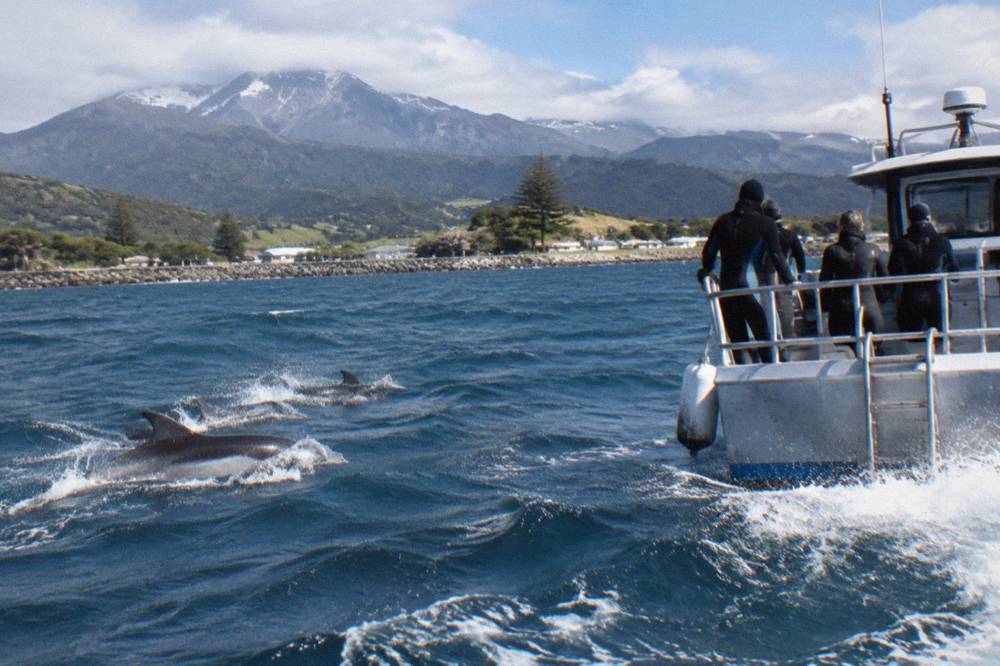
There is also a time-of-day protection. Whale Watch Kaikoura says DOC restricts dusky dolphin viewing from 11.30 am to 1.30 pm from November to March, a rest period for the animals. That restriction is a good example of the management DOC describes: the tourism day is literally shaped around the dolphins' need to rest during the busy calving season. If you're planning around that midday pause, the guide to dolphin viewing times in Kaikoura explains why early mornings tend to deliver the best encounters.
What no honest page can claim is a guarantee. No tour on this site promises a dolphin sighting, and no number on this page promises the animals are unaffected. A reader who wants the lowest-impact dolphin experience has a clear lever: choose watching over swimming, and choose a small group over a big one. The luxury small-group day trip caps its group at eight guests; the standard swim day trips cap at 16.
Is Watching Dolphins More Ethical Than Swimming With Them?
Watching is the lower-contact choice, and it is available on the same waters at a lower price: the Dolphin Encounter watch day trip from Christchurch runs 10 hours with lunch included, from $217 per person, rated 4.3 across 15 reviews. The same DOC approach rules apply to the boat either way; the difference is that nobody enters the water.
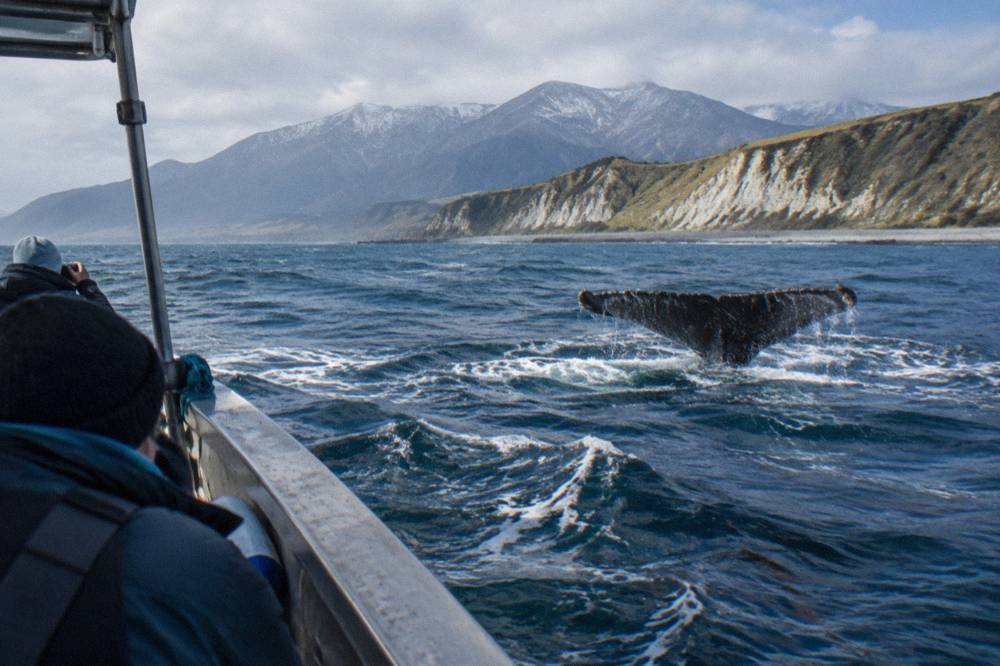
The ethics gap between swimming and watching is real but narrower than many expect. The boat, not the swimmer, is what the dolphins experience: it is the vessel that must keep its speed, angle and distance inside the rules. A watcher and a swimmer on the same trip produce almost identical boat traffic. The swimmer adds people in the water, which is a further intrusion, but it is an intrusion the rules specifically manage through the calf ban and the swimmer guidance.
So a reader whose concern is impact per boat should note that both formats share it, and a reader whose concern is contact should choose watching. On this site, the watch choice is the Dolphin Encounter, Meal Included day trip: a 10-hour Christchurch trip with lunch included and Christchurch pickup, from $217 per person, the cheapest dolphin day trip covered here. It is a watching format, so it suits readers who want the dolphins on the animals' terms entirely.
For readers weighing the same question about whales rather than dolphins, the rule book is blunter: swimming with whales is not permitted in New Zealand at all. Whale watching from a boat or the air is the only format, which is why the Kaikoura whale watching tours compared page lists boats, flights and helicopters with no in-water option. The guide to Kaikoura dolphin swim tour prices carries the full price picture for the swim side.
How Do You Choose An Ethical Kaikoura Dolphin Tour?
Choose a tour that states its terms plainly: minimum age, group size, what gear is included, where it starts, and its cancellation window. On this site the swim day trips state a minimum age of 8 and a group cap of 16, the luxury tour caps at 8, and all 17 tours come with free cancellation, though the window runs from 24 hours on most of them up to 6 days on a few.
The practical test of an ethical operator is transparency, because the reader can verify it before booking. A tour that hides its group size, its age floor or its refund terms makes an informed ethical choice impossible. The tours covered here state those terms, and the table below sets out the ones that matter most to a low-impact choice.
| Day trip (all from Christchurch) | Format | Group max | Min age | Lunch | Wetsuit | From, per person | Cancellation window |
|---|---|---|---|---|---|---|---|
| 12-Hour Dolphin Swim Day Trip, Leisure Tours | Swim | 16 | 8 | No | Yes | $283.14 | Full refund 6 full days before, 50% refund 2 to 6 days |
| Luxury Small Group, Meal Included, Canterbury Trails | Swim | 8 | Not stated | Yes | Yes | $592.95 | Full refund up to 24 hours before |
| 10-Hour Swim, Meal Included, Cheeky Kea Tours | Swim | 16 | 8 | Yes | Not stated | $261.00 | Full refund up to 24 hours before |
| Dolphin Encounter, Meal Included, Cheeky Kea Tours | Watch | Not stated | Not stated | Yes | Not stated | $217.00 | Full refund up to 24 hours before |
Two ethical signals sit in that table. First, group size: the luxury tour's cap of eight is the smallest swim footprint on offer. Second, format: the watch row is the only dolphin day trip that keeps everyone on the boat. Price is a weaker signal, since the dearest option here is also the smallest group, while the cheapest swim is a new listing with no reviews yet, so nothing in its short history supports any claim about quality either way.
Readers who want a fuller treatment of the welfare debate, including the safety angle, can follow the piece on whether swimming with dolphins is safe. The two questions overlap: tours that manage swimmer safety well tend to manage animal contact well too, because both come from the same operator discipline.
What About Seals, Whales And The Other Kaikoura Wildlife?
The same rule book covers every marine mammal, with different limits: 50 m from whales, 20 m from hauled-out fur seals, no swimming with whales, and no touching or feeding. Seal swims run under their own operator terms, and the whale boats and flights are watch-only formats governed by the same approach and speed rules as the dolphin tours.
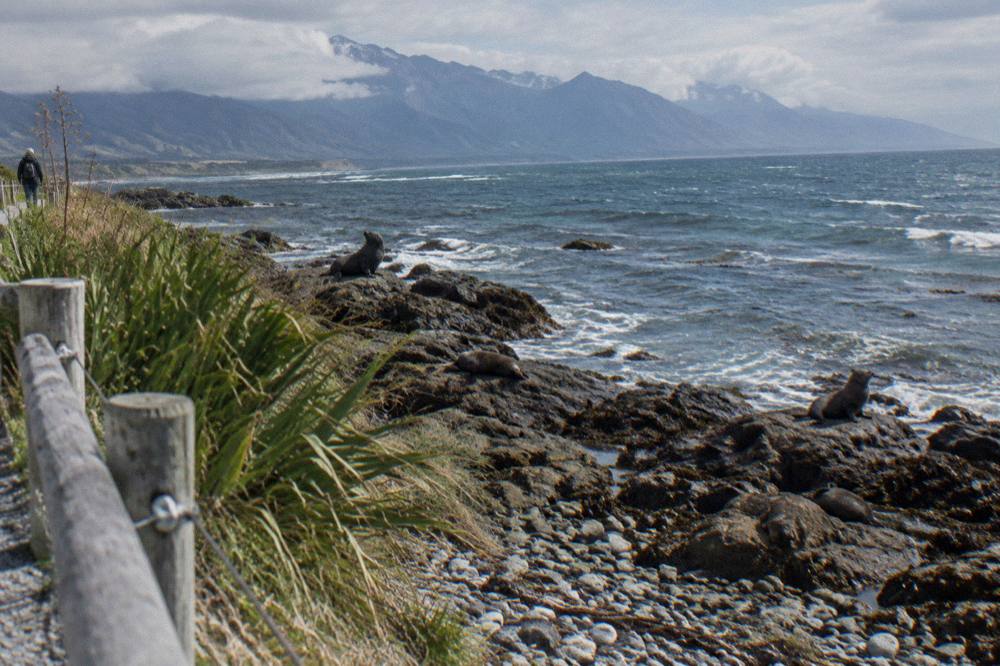
Kaikoura is a stronghold for kekeno, the New Zealand fur seal, a taonga species for Ngati Kuri and Te Runanga o Ngai Tahu. DOC's guidance for seals on shore is straightforward: stay at least 20 m away, keep quiet, keep dogs and children back, and never feed or touch, because disturbed mothers can abandon pups. In the water, a DOC-licensed seal swim operator has run swims at Kaikoura since 1987 with a minimum age of 12, supplied wetsuits and a 50% refund or a second tour if no seals are seen in the water, that operator's own stated policy.
Whale watching has its own ethics shape. Sperm whales are described by the Kaikoura boat operator as year-round residents, seen close to shore above a submarine canyon that lies near the coast, and the operator says over 90% of its tours find whales, refunding 80% of the fare if none is seen. Those are that operator's figures and that operator's policy, which applies to its own tour only. A typical outing, the operator says, sees one or two whales. The most reviewed tour covered on this site is that boat trip: 3 hours 30 minutes in total with up to 2 hours 30 minutes on the water, from $101.85, rated 4.5 across 3,057 reviews. For a fuller picture of how these practices stack up, the guide to whale watching ethics in Kaikoura explains the DOC rules that govern tours and how to pick an operator that treats the animals well.
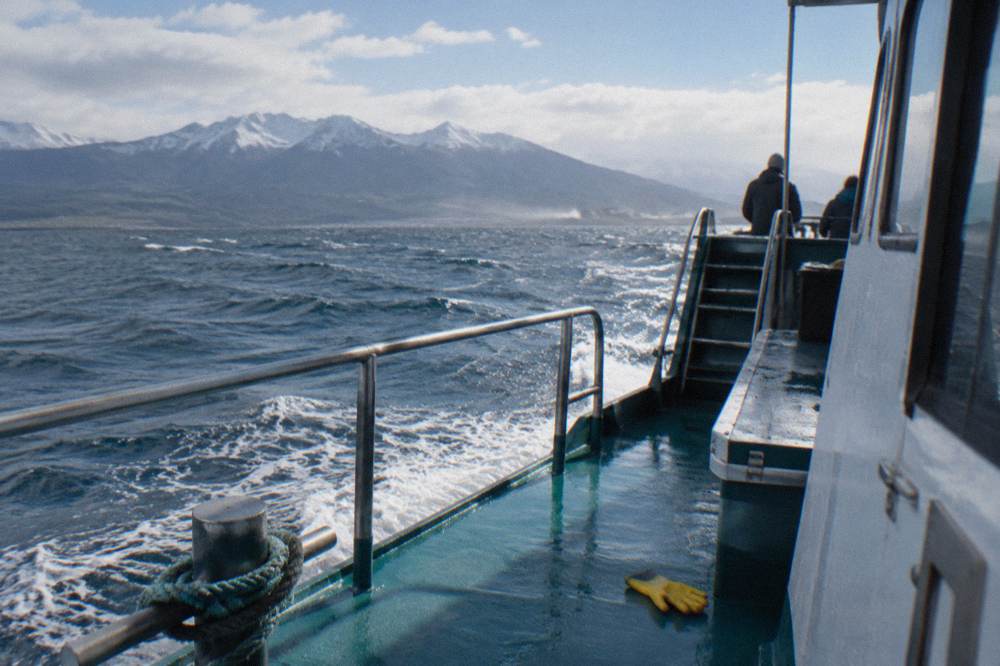
The watching formats extend into the air. Fixed-wing whale flights leave from the Peketa airfield and one helicopter from the beachfront helipad, and the aircraft rules are part of the same regulations: more than 150 m from any marine mammal, counted inside the three-vessel limit. Albatross viewing, run as a Christchurch day trip bundling a small-boat outing for about a dozen guests, uses frozen chum from local commercial fishers to bring the birds close, the operator says, with no sighting guaranteed.
Should You Swim Or Watch On Your Kaikoura Trip?
If your ethics start from minimum contact, watch: the $217 dolphin watch day trip keeps you on the boat under the same DOC rules. If you want the swim and accept a regulated wild encounter, the swim day trips from $261 to $592.95 state their age floors, group caps and gear, and every one is free-cancellable. Neither choice is a sighting guarantee, and no tour promises one.
A useful way to close the question is to separate what a reader controls from what nobody controls. The reader controls the format, the group size, the operator and the booking terms. Nobody controls the dolphins, the weather or the sightings. The DOC framework handles the second part, which is why Kaikoura Dolphin Tours covers only operators whose terms are stated up front, and why the ethics conversation here is about choices rather than guarantees.
The dolphin boat is weather-dependent like every open-water outing at Kaikoura, and cancellations for sea conditions are normal, not exceptional. On the Leisure Tours swim day trip and overnight package, the operator says only the unused portion is refunded if the dolphin boats do not sail, a policy worth reading before booking, and the 12-hour day trip needs a cancellation 6 full days ahead for a full refund. Those terms are the ethics of the transaction, and they deserve the same attention as the rules on the water.
For many readers the answer is a both-and rather than either-or: a watch day trip for the dolphins, or a swim paired with a whale boat or flight on a two-day package. Whatever the mix, the same three questions do the ethical work. Who holds the permit, what rules govern the water, and what does the tour state plainly before payment.
Common Questions About Swimming With Dolphins Ethically
How Ethical Is Swimming With Dolphins?
At Kaikoura it is legal, licensed and rule-bound: DOC regulations ban swims with pods that have very young calves, cap vessels near the animals, and shape every approach. DOC says its management at Kaikoura focuses on limiting tourism impacts. Watching is the lower-contact option, but no format guarantees a sighting or zero impact.
Is Swimming With Dolphins Banned Anywhere In New Zealand?
Swimming with whales is not permitted under the Marine Mammals Protection Regulations 1992, and swimming with dolphin pods that have very young calves is banned. Swimming with dolphins and seals is otherwise allowed under the approach, speed and vessel-count rules.
Do The Tours Feed Or Touch The Dolphins?
No dolphin tour covered here feeds the dolphins, and the guidance recorded from the Kaikoura dolphin boat operator tells swimmers not to touch the animals and to keep arms at their sides. Chumming is used only on the albatross boat outing, with frozen fish from local commercial fishers.
Is Watching Dolphins Better For The Animals Than Swimming?
Watching removes the in-water contact, which is the extra intrusion swimming adds. The boat traffic, and the DOC rules governing it, are the same either way. A small-group tour reduces the footprint further: the luxury swim day trip caps its group at eight.
Are The Dolphin Tours At Kaikoura Guaranteed To See Dolphins?
No tour on this site guarantees a sighting of any animal. The calf ban, the seasonal rest period and the weather can all change what happens on the day. Each tour states its own refund terms, which differ, so read them before booking.
What Is The Dusky Dolphin Rest Period?
Whale Watch Kaikoura says DOC restricts dusky dolphin viewing from 11.30 am to 1.30 pm between November and March so the animals can rest through the calving season. Tours work around it rather than through it.