What Are The Odds Of Seeing A Whale On A Whale Watching Tour?
Whale watching odds at Kaikoura: what Whale Watch Kaikoura actually says about sighting rates, refunds, and why sperm whales stay close to this coast all year.
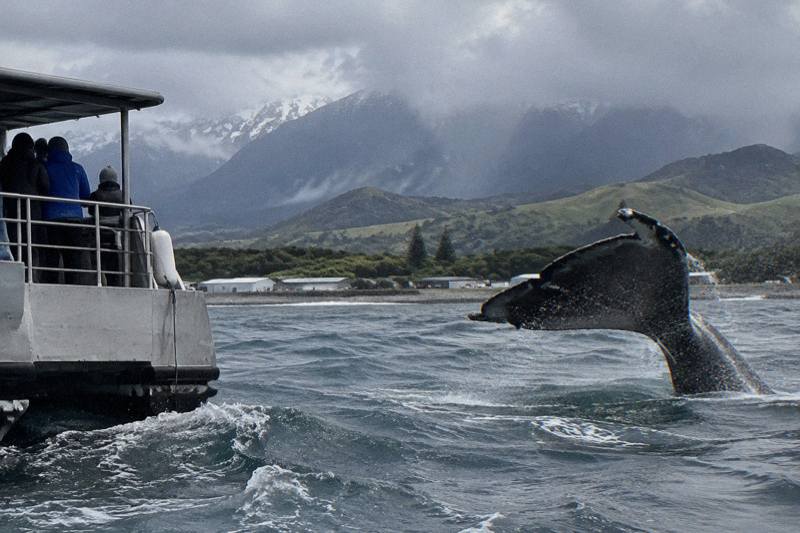
No honest operator anywhere promises a whale, and at Kaikoura only one company publishes a number: Whale Watch Kaikoura says over 90% of its tours find whales, and it refunds 80% of the fare if none is seen. That figure belongs to that operator alone. The resident sperm whales, described as year-round and close to shore, are what make the odds at Kaikoura steadier than almost anywhere else.
The question underneath the question is usually about money and time. A whale watching tour is one of the bigger single tickets on a South Island itinerary, and the fear is a long ride out to empty water. That fear is reasonable. Open ocean, wild animals, no fences. What makes Kaikoura unusual is geography: a submarine canyon lies close to the coast, and the deep, nutrient-rich water it funnels toward the surface supports sperm whales that the operator describes as year-round residents, one of the few places in the world where they can be seen year-round and close to shore.
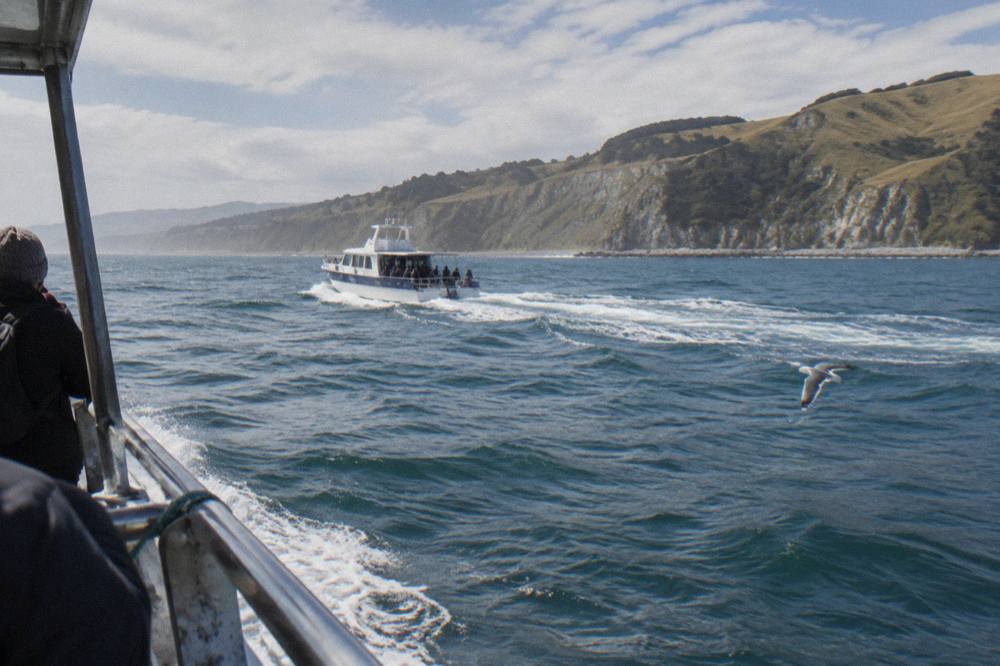
The boat tour itself runs 3 hours 30 minutes in total with up to 2 hours 30 minutes on the water, from $101.85 per person, and it carries 4.5 across 3,057 reviews, the deepest review pool of any tour covered on this site. A typical outing, in the operator's own description, sees one or two whales. Guests are asked to arrive 30 minutes before departure at the Whale Watch Kaikoura base on Whaleway Station Road, and a bus runs from the base to the South Bay marina where the boats tie up.
What that over 90% figure does not mean is a guarantee. The captain decides shortly before check-in whether conditions allow the tour to sail at all, minimum passenger numbers apply, and open-ocean conditions change quickly. And the number belongs to the boat operator only. The scenic flights, the helicopters and the Christchurch day trips that bundle a whale watch make no sighting-rate claim, and this article will not invent one for them. If a whale matters to your decision, the honest comparison is between the one operator that publishes its rate and the ones that publish none.
Why Are Sperm Whales So Reliable At Kaikoura?
Sperm whales hold position over the Kaikoura canyon because the food is there, and the operator describes them as year-round residents, one of the few such places in the world. That is the single biggest reason sighting odds at Kaikoura beat most coastlines: the whales are not migrating through, they are working the same deep water in every month.
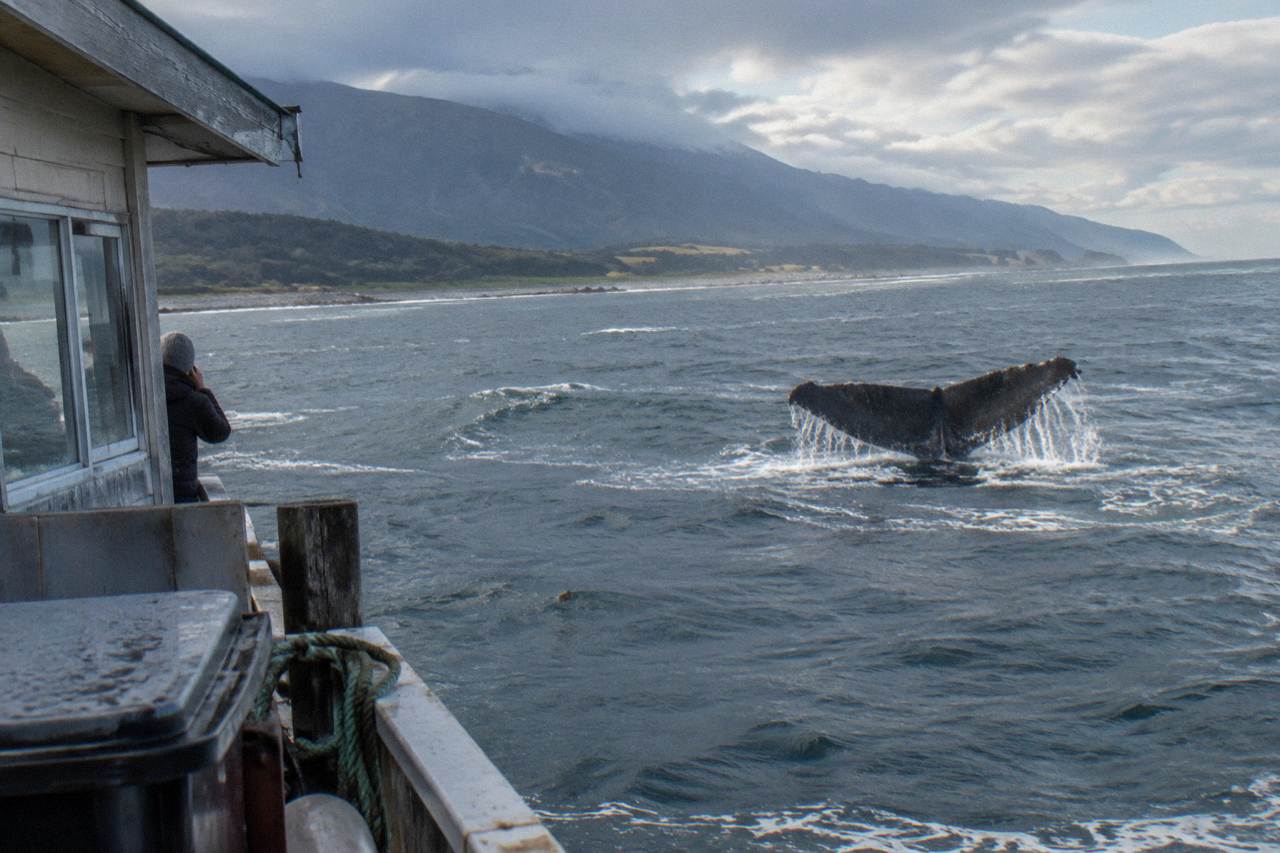
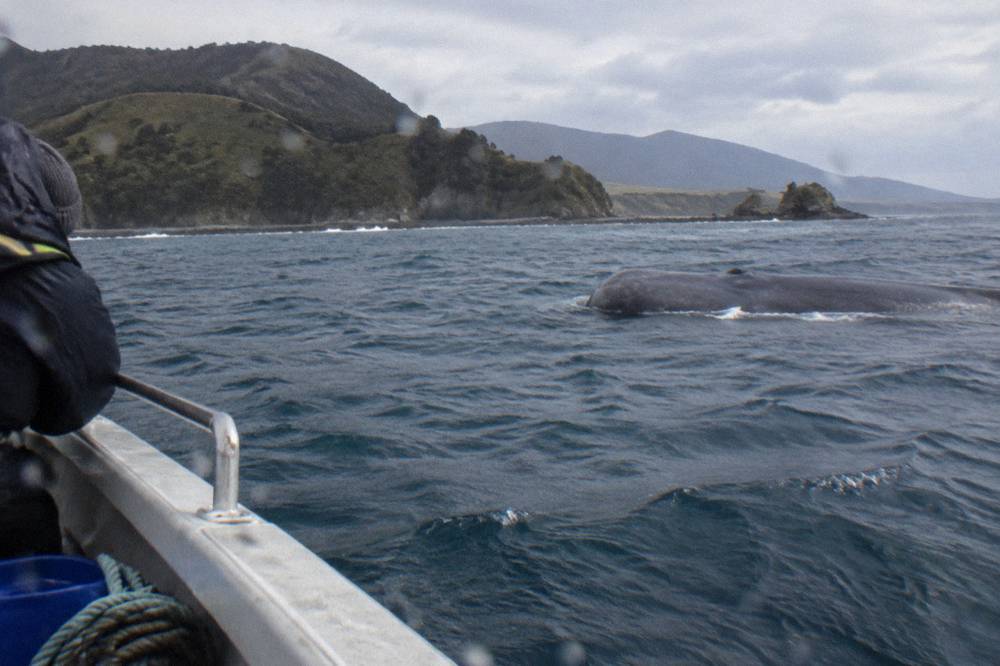
The canyon is the engine. It lies close to the coast. Between dives a sperm whale rests at the surface, and a tour that finds a surfacing animal typically gets several minutes of viewing before the flukes lift and the whale drops into a long dive. The operator's own FAQ describes a typical outing as seeing one or two whales, which is a more useful expectation to hold than any percentage: this is deep-water wildlife viewed from a working boat, not a pool show.
The rest of the calendar is described only as seasonal. Depending on the season, migrating humpback, pilot, blue, southern right and fin whales can pass, and orca are seen at times, especially in summer. None of them is promised on any date, and no tour on this site will promise one. The sperm whale is the anchor of the operation, the animal the sighting rate is built on, and the reason a Kaikoura whale tour in June has a plausible shot at a whale rather than none at all.
A useful detail from the same operator: it says DOC restricts viewing of dusky dolphins from 11.30 am to 1.30 pm from November to March, a rest period for the dolphins that tour planning can quietly work around. The broader framework is the Marine Mammals Protection Regulations 1992, which set approach rules, vessel limits and distances around every marine mammal in New Zealand waters, which is why boats idle rather than chase.
What Happens If No Whale Appears?
On the Whale Watch Kaikoura boat, the operator refunds 80% of the fare if no whale is seen, and it says over 90% of its tours find one. That refund wording belongs to that operator and that tour only; no other whale product on this site carries a stated sighting refund, so no other figure applies.
The 80% refund is the number that quietly answers the odds question. It means the operator is willing to put money behind its own rate, which is rarer than it sounds in wildlife tourism. Compare the one other refund rule in the Kaikoura marine wildlife family: Seal Swim Kaikoura, a different operator for a different animal, offers a 50% refund or a second tour if no seals are seen in the water. The two figures are not comparable and should not be blended into a general rule about Kaikoura tours, because none exists.
For the day trips from Christchurch, the terms that matter are different. The Cheeky Kea whale day tour, 10 hours with 120 minutes on the water, from $212.00 per person, rated 4.6 across 332 reviews, offers a full refund if cancelled up to 24 hours before the start. The Leisure Tours 11-hour whale day trip, from $221.29 per person, rated 4.4 across 197 reviews, gives a full refund if cancelled at least 6 full days before the start, with a 50% refund 2 to 6 full days before. Those are cancellation windows for you changing your mind, not sighting refunds, and the distinction is worth holding clearly: one protects you from the ocean, the others protect you from your calendar.
Weather cancellations are a separate layer again, and the Whale Watch Kaikoura boat offers another date or a full refund if the operator cancels for weather. So the realistic worst case on the boat tour is not "paid and saw nothing," it is "rescheduled or refunded if the sea wins, and 80% back if the whales stay down." Readers weighing the boat against a self-drive day can work through the fuller comparison in the guide to Kaikoura whale watching tours compared, and the seasickness question is covered in whether people get seasick on whale watching boats.
Do Flights And Helicopters Find Whales Too?
Aerial whale watching at Kaikoura makes no published sighting-rate claim on any of the four flight products covered here, so no odds can be honestly stated for them. What flights change is the search: a fixed-wing aircraft or helicopter covers far more ocean in 30 to 75 minutes than a boat can.
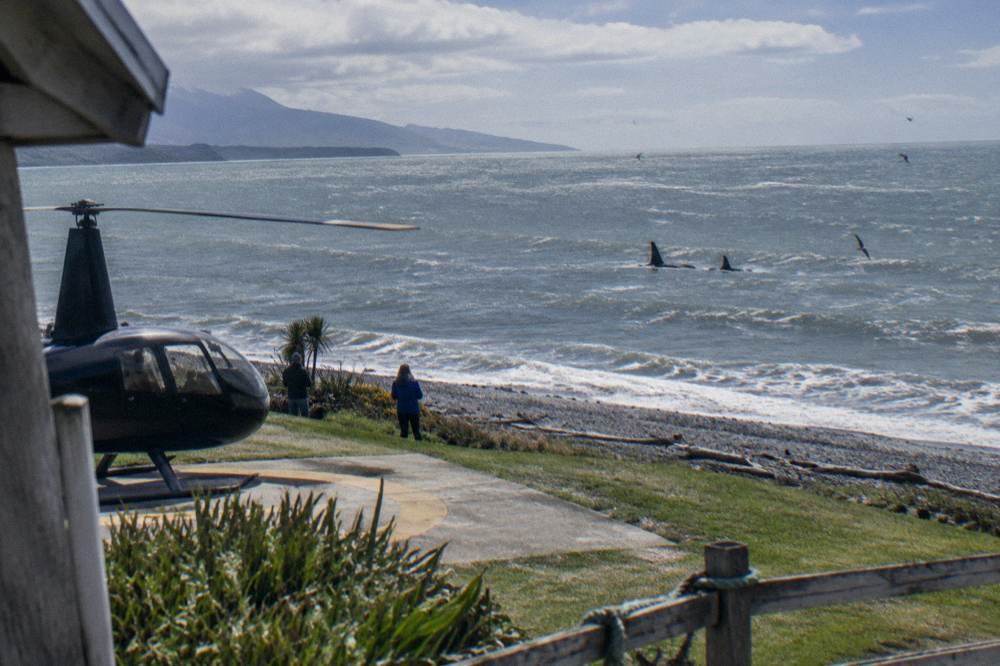
Four aerial products run from two bases. Air Kaikoura's 40-Minute Whale Flight leaves from the airfield at Peketa, from $167.39 per person, rated 4.9 across 229 reviews, with hotel pickup stated not included. Wings Over Whales flies a 30-Minute Whale Flight from the same airfield, from $150.36 per person, rated 4.7 across 204 reviews. Kaikoura Helicopters runs a 30-Minute Whale Watch from the beachfront helipad at West End, from $238.31 per person, rated 4.8 across 48 reviews. South Pacific Helicopters NZ runs the Ocean Safari, 1 hour 15 minutes from Peketa, from $482.30 per person, rated 5.0 across 46 reviews. All four offer a full refund if cancelled up to 24 hours before the start.
From the air, a surfacing sperm whale is spotted as a shape and a footprint of calm water among the swell, and the aircraft can move between sightings quickly. But the same rule applies as on the water: flights depend on weather, no departure or sighting is promised, and printing an odds figure for a flight that publishes none would be invention. What can be said is that the sperm whales are resident, the flights operate over the same canyon system, and the aircraft cover more of it per minute than any boat.
| Tour | Operator | Format | Duration | From (USD) | Rating and reviews |
|---|---|---|---|---|---|
| Whale Watch Kaikoura Boat | Whale Watch Kaikoura | Boat | 3h 30m, up to 2h 30m on the water | $101.85 | 4.5 from 3,057 reviews |
| 40-Minute Whale Flight | Air Kaikoura | Fixed wing | 40 minutes | $167.39 | 4.9 from 229 reviews |
| 30-Minute Whale Flight | Wings Over Whales | Fixed wing | 30 minutes | $150.36 | 4.7 from 204 reviews |
| Helicopter 30-Minute Whale Watch | Kaikoura Helicopters | Helicopter | 30 minutes | $238.31 | 4.8 from 48 reviews |
| South Pacific Ocean Safari | South Pacific Helicopters NZ | Helicopter | 1h 15m | $482.30 | 5.0 from 46 reviews |
The 5.0 and 4.9 ratings above are real but carry small pools, 46 and 229 reviews respectively, so they should be read as strong satisfaction among those who flew, not as a sighting statistic. The deepest pool in the air is Air Kaikoura at 229; the deepest on the whole coast is the boat at 3,057. Reviews measure the whole experience, the flight, the commentary, the crew, not whether a specific passenger saw a fluke.
What Whales Other Than Sperm Whales Might You See?
Depending on the season, migrating humpback, pilot, blue, southern right and fin whales can pass Kaikoura, and orca are seen at times, especially in summer, in the operator's description. None of them is promised on any date or month, and no tour here sells a specific species beyond the resident sperm whales.
The seasonal visitors are the bonus layer of a Kaikoura whale tour. The sperm whale is the working core of the operation, present year-round in the operator's description, while the migrants move through on their own calendars. The honest way to plan is to expect sperm whales, treat anything else as a gift, and be suspicious of any operator, article or forum post that names a month for humpbacks or a probability for orca. The verified guidance describes the seasonal species only as "depending on the season," and this article will not sharpen that into a calendar.
Dolphins share the same water, and DOC describes groups of several hundred to over 1000 dusky dolphins present at Kaikoura all year round, moving further offshore in winter. Many whale outings encounter dolphins on the way, and from October to May the operator says the duskies move inshore in the early morning to the southern side of the Kaikoura Peninsula. Readers whose real interest is the dolphins rather than the whales can start with the guide to Kaikoura dolphin watching tours, while the combined-format options sit in the guide to whale and dolphin tours combined.
One regulatory note that shapes what you will see from any vessel: under the Marine Mammals Protection Regulations, boats idle or travel at no-wake speed within 300 m of any marine mammal, no more than three vessels or aircraft may be within 300 m at once, and aircraft stay more than 150 m away. So if a whale is surface-resting between dives, the boat holds a respectful station rather than crowding it, and the viewing time you get is the whale's own rhythm, not the skipper's throttle.
What Happens If The Weather Cancels Your Tour?
Every weather-dependent boat and flight product covered here offers another date or a full refund if the operator cancels for weather, so a weather cancellation costs you the day, not the fare. On the boat tour the captain makes the call shortly before check-in, which is why guests are asked to arrive 30 minutes before departure.
The timing of that decision matters for planning. Sea conditions at Kaikoura change quickly, and a morning that looks doubtful from shore can be workable by check-in, or the reverse. The operator carries wheelchair passengers if sea conditions suit, runs a bus from the Whaleway Station Road base to the South Bay marina, and applies minimum passenger numbers. If the tour does not sail, the choice is a new date or a full refund.
For the day trips, the cancellation clock runs on your booking, not the weather. The Cheeky Kea whale day tour, with Christchurch pickup and lunch included, refunds in full up to 24 hours before the start. The Leisure Tours 11-hour whale day trip, starting in Christchurch, needs 6 full days for a full refund, with 50% between 2 and 6 full days. Book the tighter window too close to the date and a storm forecast becomes a genuinely expensive problem, which is a better argument for early booking than any sighting statistic.
The NZTA journey planner is the practical tool for the drive itself, since the coastal highway south of Kaikoura was damaged by storm flooding in July 2026. Operators describe the drive north from Christchurch as about 2.5 hours. Anyone weighing the drive against a coach day trip can take the fuller argument in the guide to Christchurch to Kaikoura, drive or day tour.
How Do You Improve Your Chances Of A Sighting?
You cannot improve the odds of a whale being there, but you can improve the odds of being on the water when conditions are good: book the operator with the published rate, keep your date movable, avoid the tight cancellation windows, and pick the format, boat or aircraft, whose weather tolerance suits you. Everything else is luck.
The first lever is format. A boat tour spends up to 2 hours 30 minutes on the water and can hold position near a surfacing whale; a fixed-wing flight covers far more ocean in 40 minutes but gives you less time over any single animal. Neither is the better whale finder in any provable sense, because only the boat publishes a rate. The second lever is schedule slack: a traveller with three nights in Kaikoura who gets weathered off day one has two more chances, while a traveller on a 10-hour day trip from Christchurch has exactly one shot at the sea state of that morning.
The third lever is booking structure. Full-refund windows range from 24 hours on most tours to 6 full days on the Leisure Tours products and 3 days on the Discover New Zealand 2-day package. A movable booking plus a wide cancellation window plus a couple of spare days in town is the combination that quietly raises your real-world odds more than any month choice could. The seasonal visitors, humpbacks, orca and the rest, are described only as "depending on the season," so chasing them by calendar is guessing.
Finally, hold the right expectation of success. A typical outing sees one or two whales, for some minutes each, in open ocean, from a boat or a aircraft that follows strict distance rules. The whales are resident, the operator stands behind an 80% refund if none appears, and the sea decides the rest. That is as good as whale watching odds get anywhere, and no tour on this site will honestly promise more. This article sits alongside the wider planning coverage on Kaikoura Dolphin Tours, where the full whale and dolphin tour set is compared side by side.
Common Questions About Whale Watching Odds
What Are The Odds Of Seeing A Whale On A Whale Watching Tour?
At Kaikoura, Whale Watch Kaikoura says over 90% of its tours find whales and refunds 80% of the fare if none is seen. That figure is that operator's own, on its own boat tour only. The resident sperm whales, described as year-round and close to shore, are what keep the odds steady through the year.
Is The Whale Sighting Guaranteed At Kaikoura?
No. No tour on this site guarantees a whale or any animal. The closest thing to a guarantee is the Whale Watch Kaikoura refund of 80% of the fare if no whale is seen, and that operator's own statement that over 90% of its tours find whales.
How Many Whales Do You Usually See On A Kaikoura Tour?
The operator's FAQ describes a typical outing as seeing one or two whales, usually sperm whales resting at the surface between deep dives. Depending on the season, migrating humpback, pilot, blue, southern right and fin whales can pass, and orca appear at times, but none is promised on any date.
Do The Whale Watching Flights Have Better Odds Than The Boat?
No flight operator publishes a sighting rate, so no honest comparison exists. Flights cover more ocean in 30 to 75 minutes than a boat can, which many travellers read as higher confidence, but the only published figure on the coast is the boat operator's own.
What Happens If The Tour Is Cancelled For Weather?
Every weather-dependent boat and flight tour covered here offers another date or a full refund if the operator cancels for weather. On the boat tour the captain makes the call shortly before check-in, and guests are asked to arrive 30 minutes before departure.
Are Sperm Whales At Kaikoura All Year?
Yes, in the operator's description. Sperm whales are described as year-round residents, one of the few places in the world where they can be seen year-round and close to shore, because a submarine canyon lies close to the coast and feeds the prey they hunt.