Is Swimming With Dolphins Safe?
A safety-focused look at Kaikoura dolphin swim tours: the DOC rules that govern every swim, the swimming ability and age limits operators set, the gear provided, and what happens when weather cancels a trip.
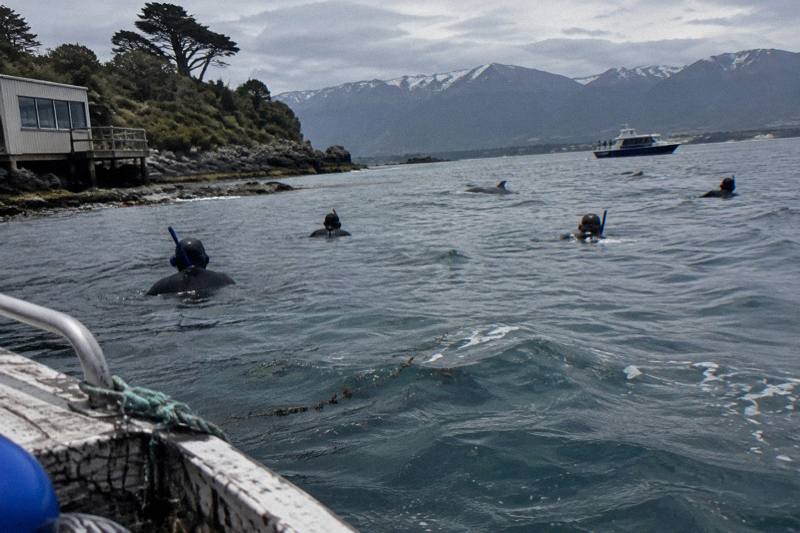
Yes, in the sense that matters to a booking decision: swimming with dolphins at Kaikoura is a licensed, guided activity governed by national marine mammal regulations, run by operators who supply wetsuits where stated and cancel trips when conditions are wrong. It is not a risky free-for-all, but it is an open-water swim that asks for genuine swimming ability and honest self-assessment.
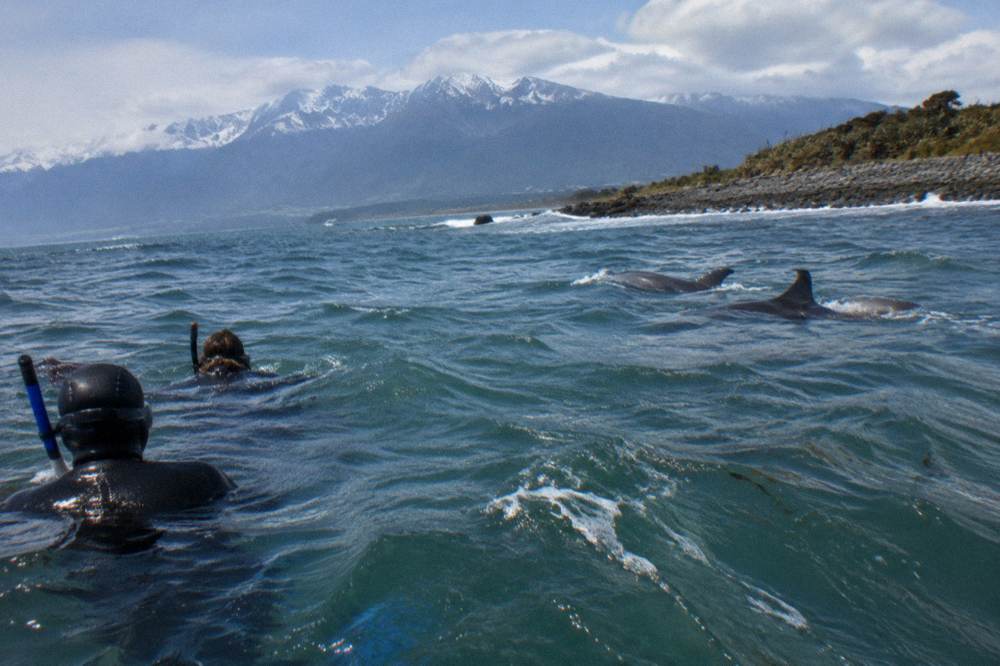
The question deserves a straight answer rather than a reassuring one. New Zealand's Marine Mammals Protection Regulations 1992 set the frame for every dolphin interaction on the Kaikoura coast, from how a boat approaches a pod to how many vessels may be near the animals at once. Swimmers enter the water with a crew watching, in a small group, wearing the wetsuit and snorkel gear where the tour states it. None of that removes the open ocean, the cold water or the fact that dolphins are wild animals that choose whether to engage.
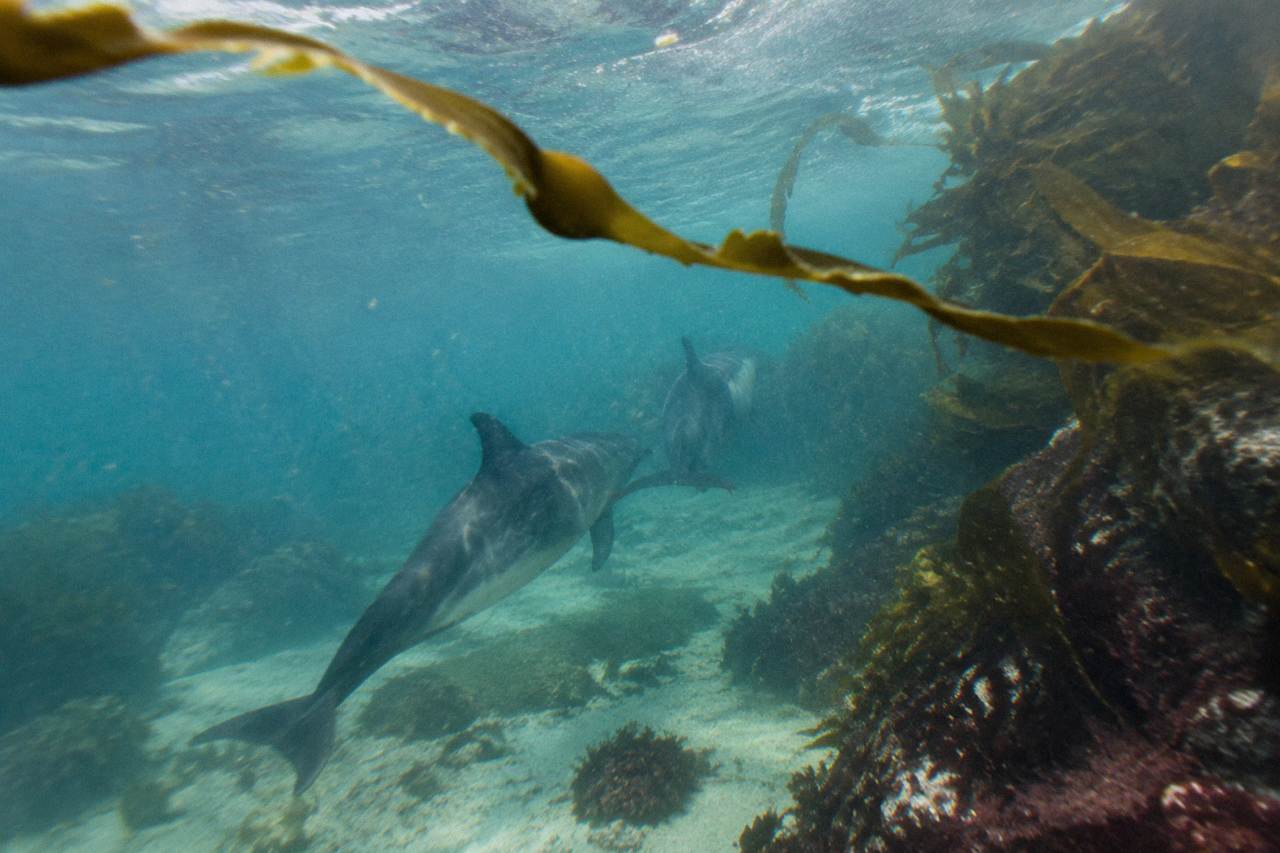
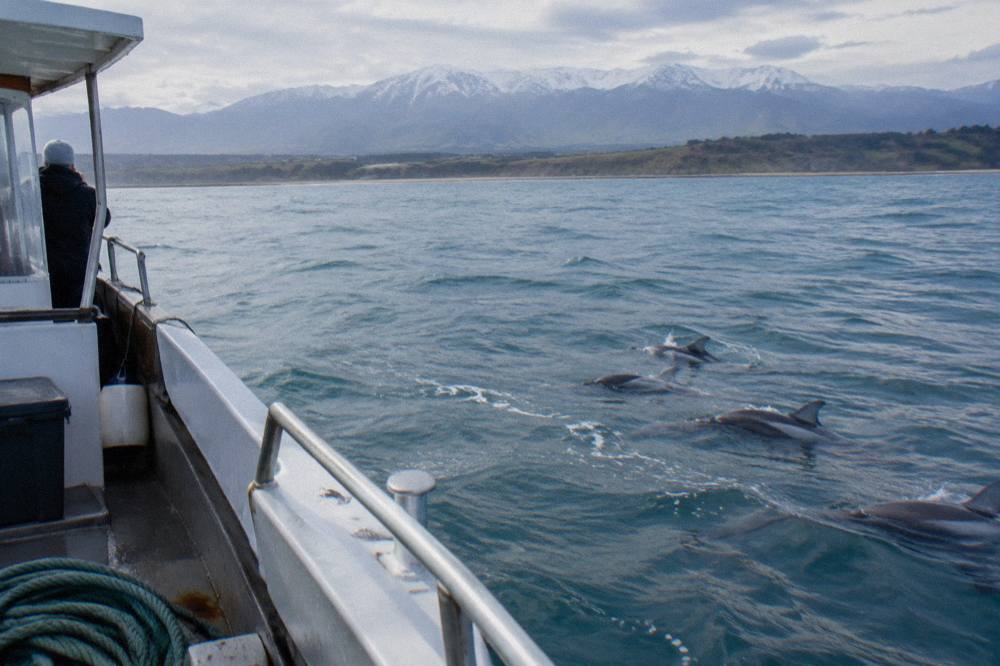
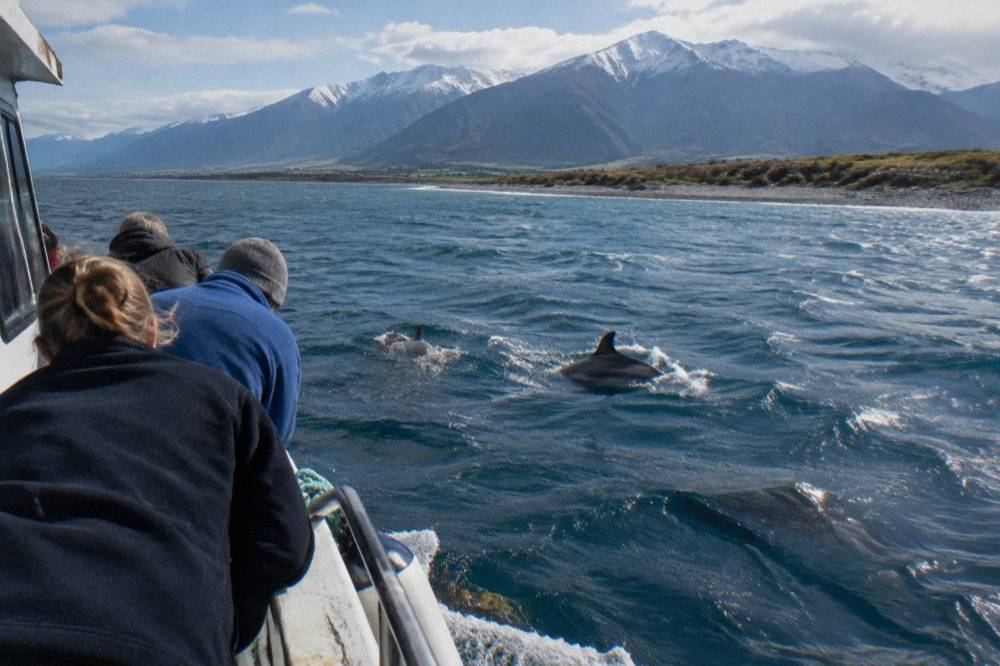
The dolphin species at the centre of these tours is the dusky dolphin. The Department of Conservation describes groups of several hundred to over 1000 duskies present at Kaikoura all year round, moving further offshore in winter. Swimmers do not chase them; the boat positions near the pod and the dolphins decide the rest. That single fact shapes most of the safety picture, because it means the activity is calm, slow and boat-supported rather than a pursuit.
One structural point matters before any safety detail. The Kaikoura dolphin boat operator sells direct only. Every dolphin swim product bookable through this site is a Christchurch day trip or two-day package that bundles that boat outing, run by a coach operator from Christchurch. So when this article discusses a swim, it discusses the day trip you actually book, using that trip's own figures for price, duration and group size. To see exactly what each swim day trip and two-day package includes, and how the watch-only option compares on price, the guide to Kaikoura dolphin swim trip costs spells it out.
For a worried reader, the useful framing is a checklist rather than a verdict. The sections below cover the rules that protect both swimmer and dolphin, the swimming ability operators expect, the age minimums, the gear supplied, the no-touching guidance, weather cancellations and the questions worth asking before you pay. Each one answers a question a nervous first-time swimmer actually asks.
What Rules Keep Swimmers And Dolphins Safe In Kaikoura?
Swims in Kaikoura operate under the Marine Mammals Protection Regulations 1992, which cap vessel numbers at three within 300 metres of the animals, require idle or no-wake speeds inside that range, and dictate that boats approach dolphins from behind and to the side rather than circling or cutting through a pod. Swimmers may enter the water with dolphins but never with whales, and never with pods carrying very young calves.
Those rules are the quiet backbone of the whole activity. A boat that must slow to idle within 300 metres is a boat that cannot accidentally overwhelm a pod or a swimmer in the water. The approach rules mean dolphins are never boxed in or separated. The three-vessel limit caps how much traffic a single pod faces on any morning. Penalties sit behind all of it under the Marine Mammals Protection Act 1978, which is why licensed operators treat the rules as operating procedure rather than suggestion. The Department of Conservation summarises these requirements on its marine mammal rules page.
Worth knowing: the regulations themselves set no minimum age, no swimming-ability standard and no swimmer count. Those are per-operator terms, which is why they differ from trip to trip across the day tours covered here. The national rules govern the animals; the operator's own terms govern you.
| Protection | What the rule says | Who it protects |
|---|---|---|
| Speed within 300 m | Idle or no-wake speed near any marine mammal | Dolphins and swimmers in the water |
| Approach direction | From behind and to the side, never circling or cutting through a group | The pod's ability to move freely |
| Vessel limit | No more than three vessels or aircraft within 300 m of a marine mammal | Animals from crowding |
| Swims with calves | No swimming with dolphin pods with very young calves | Mothers and calves |
| Whales | Swimming with whales is not permitted at all | Swimmers, plainly |
The Department of Conservation also focuses its Kaikoura management on limiting tourism impacts on the dolphins, which is the regulatory reason swim numbers and viewing windows exist at all. Whale Watch Kaikoura notes that DOC restricts dusky dolphin viewing from 11.30 am to 1.30 pm from November to March, a rest period for the animals. A swim that respects these limits is, by design, a swim that happens on the dolphins' terms.
Do You Need To Be A Strong Swimmer To Swim With Dolphins In Kaikoura?
On the 12-hour dolphin swim day trip from Christchurch, the operator's terms are explicit: swimmers swim up to 50 metres from the boat and need to be confident swimmers. There is no deck to stand on in the middle of the ocean, which is why ability requirements exist and why they should be read honestly before booking.
This is the single most common safety concern, and it deserves the plainest answer available. The dolphin swim is not a float in a lagoon. You enter the sea from the boat, you move toward the animals, and you stay in the water while the crew watches from the vessel. A confident swimmer with basic snorkel comfort is the profile the trip is built for. Anyone who swims rarely, tires quickly or feels anxious in deep water should weigh the watching option instead, which the same coast offers as a seated boat experience.
The decision framework is genuinely useful here. A reader torn between the two formats can compare them properly in the guide to Kaikoura dolphin swim vs dolphin watch. The short version: watching keeps you on the boat, dry, with the same pods in view; swimming puts you in the water with them. Both are safe activities; only one demands swimming fitness.
For those who want to dig into the ability question in detail, the article Do you have to be a good swimmer to swim with dolphins covers it question by question. What matters at booking time is that you assess yourself against the operator's stated terms, not against the most confident person in your travelling group.
The Cheeky Kea Tours swim day trip offers a slightly different package shape: a 10-hour day from Christchurch from $261 per person, with lunch included, a minimum age of 8 and a group capped at 16. It is a new listing without reviews yet, so there is no traveller feedback to consult; the booking terms are the source of truth on swimming expectations for that trip.
One reassurance worth stating plainly: nobody is pushed off a boat. The dolphin boat's own swimmer guidance keeps the experience calm, arms at your sides, no reaching for the animals, because stillness is what invites dolphins to stay near. The water does the work; the swimmer mostly holds position and watches.
How Old Do You Have To Be To Swim With Dolphins?
The three dolphin swim tours that state a minimum age all set it at 8 years: the 12-hour Leisure Tours swim day trip, the 10-hour Cheeky Kea swim day trip and the overnight Leisure Tours package. The seal swim, a different activity, sets its minimum at 12 on the operator's own page. The remaining tours state no minimum age, so the booking terms for each specific trip are the deciding document.
Age minimums are a safety control, not a marketing line. They exist because a swimmer who panics in open water is a rescue situation regardless of age, and younger children tire faster in a wetsuit in cold seas. Eight is the floor the family-oriented swim day trips have settled on, paired with a group of up to 16 travellers on the Leisure Tours and Cheeky Kea swim tours.
Unsure Whether A Swim Suits Your Family?
Every dolphin tour here can be cancelled free of charge, and the 12-hour swim day trip offers a full refund if cancelled at least 6 full days before the start. Check availability and read the age and ability terms before you commit.
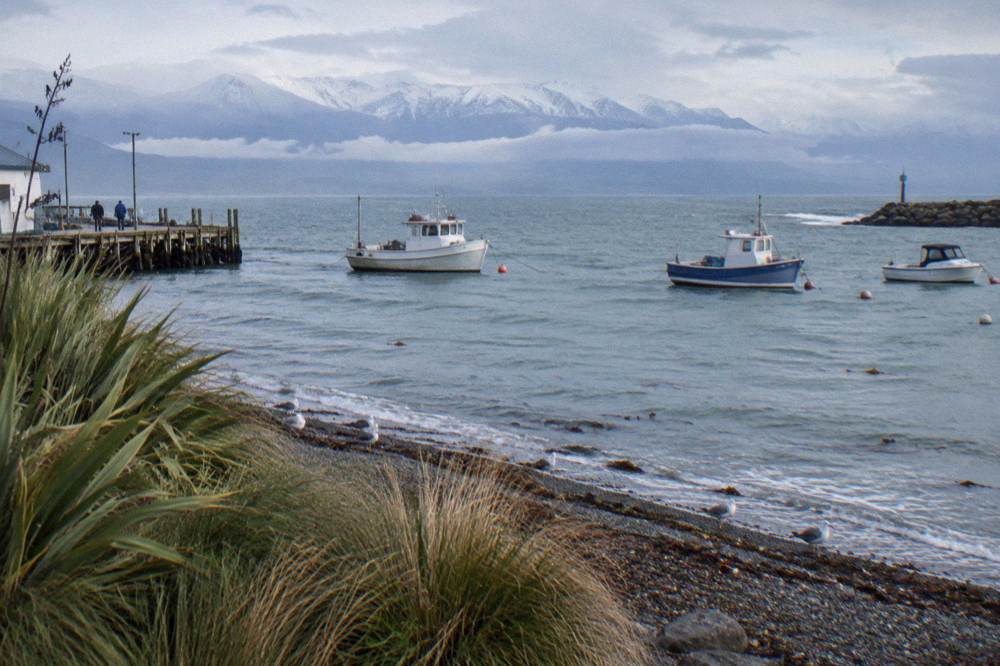
Families comparing the two formats should also know that dolphin watching exists as a seated alternative: the Cheeky Kea watch day trip, from $217 per person, includes the dolphin boat outing as a spectator with lunch included. It is rated 4.3 across 15 reviews and carries no stated minimum age, which makes it the natural fallback for a family whose youngest swimmer is not yet ready. The operator's booking terms for that trip remain the final word.
What Gear Keeps You Safe In The Water?
A wetsuit and snorkel set is stated as included on four tours covered here: the 12-hour Leisure Tours swim day trip, the Canterbury Trails luxury small group trip, the Leisure Tours overnight package and the Seal Swim Kaikoura tour. The wetsuit is not a courtesy, it is the piece of equipment that keeps a swimmer warm, buoyant and visible during an open-water dolphin swim in cool southern water.
Kaikoura's water is cool even in summer, and a swimmer without thermal protection tires quickly, and a tired swimmer is where safety margins thin out. Operators who supply wetsuits also fit them, because a poorly fitted suit floods and loses its warmth. Seal Swim Kaikoura, whose activity is a seal swim rather than a dolphin swim, states plainly that its wetsuit must fit and that life jackets are not used in the water, which tells you how the operator thinks about buoyancy: the suit and the swimmer's own ability do the work.
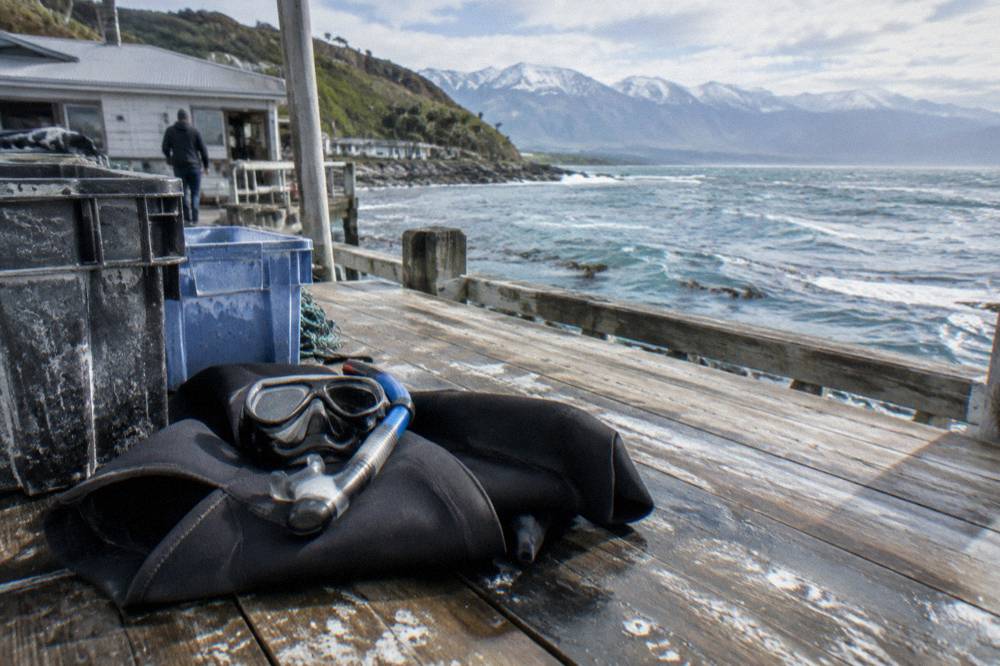
The other swim tours state no wetsuit detail, so check what the booking for your chosen trip includes before you assume. The practical checklist for any dolphin swim, based on what the stating operators publish:
- A fitted wetsuit, supplied where stated, for warmth and buoyancy in cool water
- Mask and snorkel, included with the wetsuit on the tours that state gear
- Confident swimming ability, stated explicitly on the 12-hour Leisure Tours day trip
- A group of up to 16 travellers on the Leisure Tours and Cheeky Kea swim trips, up to 8 on the Canterbury Trails luxury small group trip
The group caps deserve more attention than they usually get. A group of up to 16 on a mid-priced trip and up to 8 on the $592.95 luxury small group trip is mostly a comfort feature, since a smaller group means more room and more of the guide's attention. The luxury trip runs about 10 to 11 hours, includes lunch and the wetsuit and snorkel set, and picks up from Christchurch hotels.
Can You Touch The Dolphins While Swimming?
No. The dolphin boat operator's swimmer guidance is explicit: do not touch the dolphins, keep your arms at your sides, and let noises through the snorkel do the attracting. Touching is not a grey area in New Zealand's marine mammal framework, and a swim is structured so the swimmers stay hands-off rather than handling the dolphins.
This rule protects both parties. A startled wild dolphin is a powerful animal moving fast in close quarters, and reaching hands are the fastest way to end an interaction. The operator's guidance is to keep arms at the sides and not to chase or circle the dolphins; noises through the snorkel are what the operator says attract them. Swimmers who follow the briefing typically get longer, closer interactions than those who try to close the distance themselves.
The wider regulatory picture reinforces it. The same regulations that cap vessel numbers and set approach rules exist to limit tourism impacts on the animals, and DOC's management focus at Kaikoura is exactly that. A swim here is a privileged few minutes inside a wild pod's world, and the no-touch, arms-still briefing is the operator's method for making that sustainable.
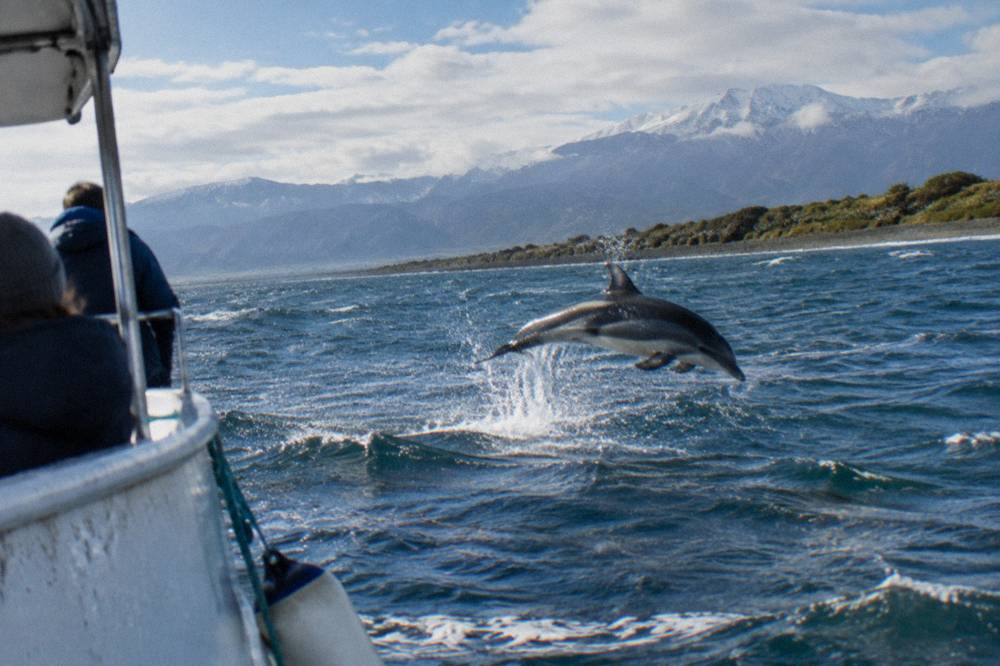
Hector's dolphins also live around the Kaikoura Peninsula in close coastal waters. DOC lists them as Nationally Vulnerable, with about 15,000 individuals older than a year, endemic to New Zealand and mostly in the South Island. They are not the focus of the tours, but a swimmer who spots a smaller dolphin with a rounded dorsal fin is looking at a Nationally Vulnerable species endemic to New Zealand, from a respectful distance.
What Happens If The Weather Turns Bad?
Every boat and flight tour here runs subject to sea and weather, and the weather terms differ by tour, so check each booking page. On the whale watching boat, the captain makes the call shortly before check-in, a reminder that ocean conditions at Kaikoura change quickly and that operators would rather lose a day than run an unsafe one.
This is the safety valve most nervous readers underestimate. The ocean off Kaikoura sits over a submarine canyon close to the coast, the same geography that brings the wildlife so near to shore, and open-ocean conditions there genuinely change fast. Operators plan for it. The decision is made by the crew, not the customer, which means a swim never goes ahead because someone paid for it; it goes ahead because the conditions passed a professional's judgement that morning.
Cancellation terms for the booking itself vary by tour and belong in your planning. Twelve of the seventeen tours here offer a full refund if cancelled at least 24 hours before the start. Four, including the 12-hour dolphin swim day trip, the overnight whale and dolphin package and the albatross day trip, ask for 6 full days for a full refund, with a 50 percent refund between 2 and 6 days before. The 2-day Discover New Zealand package sets its window at 3 days. Read the specific window for your trip before booking, not a general assumption.
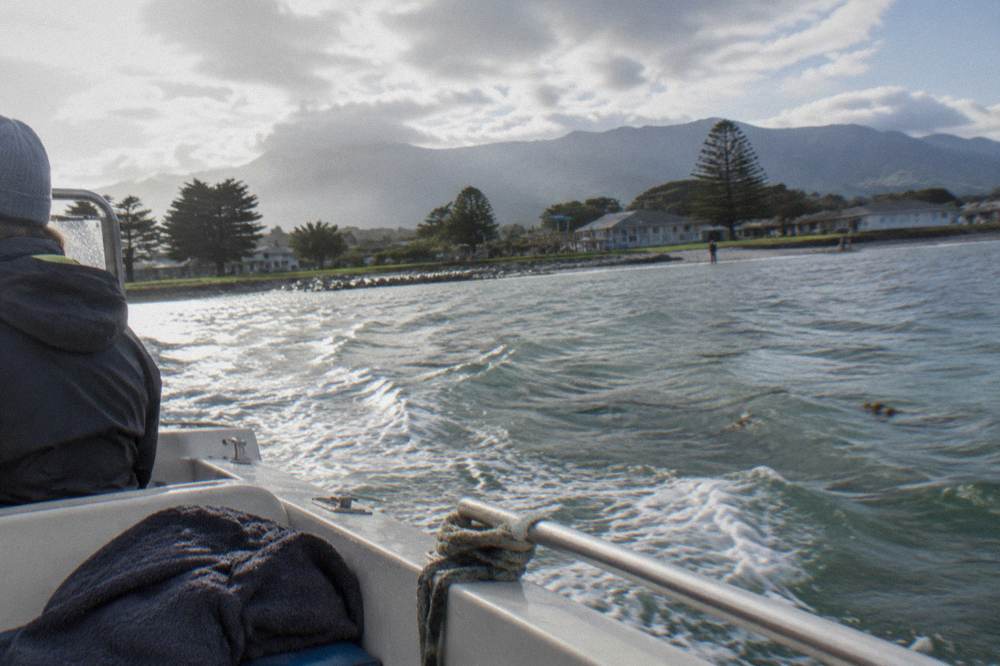
For the dolphin day trips specifically, the Leisure Tours swim and package pages say that if the dolphin boats do not sail, the unused portion of the trip is refunded. That is the honest wording: a coach day trip can still run its coastal legs while the water portion is called off. Whale Watch Kaikoura frames its own policy differently on its boat tour, where the operator says over 90 percent of its tours find whales and it refunds 80 percent of the fare if none is seen; that statement belongs to that operator and that tour alone.
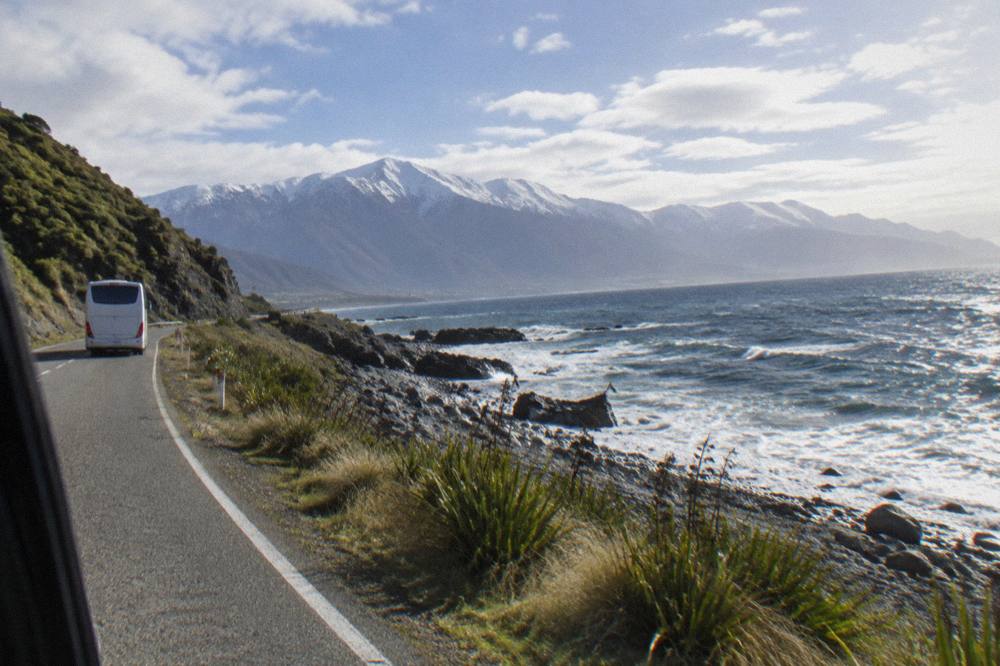
Getting to the coast has its own weather dimension. State Highway 1 south of Kaikoura ran on reduced lanes with stop/go control after storm flooding in July 2026, so the sensible habit is to check the NZTA journey planner on the day of travel. The Coastal Pacific train offers another angle on the same coast, a daily seasonal service from 1 September to 30 April that links Christchurch, Kaikoura, Blenheim and Picton, with fares on the KiwiRail site.
Is Swimming With Dolphins Safe For Pregnant Travellers?
No Kaikoura tour page on this site states a pregnancy rule, so this is a question for the operator and a doctor rather than an article. The booking page for each tour is where an operator's health terms appear, and the standard advice holds: ask before you pay, and if any doubt remains, take the watching option, which keeps you on the boat and dry.
An honest article does not fill this gap with a plausible-sounding policy. Open-water swimming in a wetsuit is physically demanding in ways that differ from person to person and trimester to trimester, and a crew cannot assess that from a booking form. Operators answer health questions before departure every week; a short message before booking settles it.
The dry alternative is real and easy. The dolphin watch day trip seats you on the same dolphin boat outing as a spectator, with lunch included, from $217 per person, rated 4.3 across 15 reviews. It delivers the pods, the peninsula and the boat morning without the swim, and pairs naturally with a whale watching option if the day allows. The site behind this article, Kaikoura Dolphin Tours, covers both formats across its guides if the decision needs more than a paragraph.
Is It Safer To Watch Dolphins Than To Swim With Them?
Watching is the lower-demand format by any measure: you stay on the boat, dry, with no swimming ability required and no minimum swimmer age to meet, while the same pods swim past the hull. Swimming adds the open-water element, which is why it carries ability terms, age minimums, gear and group caps. Neither is unsafe; one simply asks more of your body.
The right way to use this comparison is honesty about yourself, not fear of the ocean. A confident swimmer in a fitted wetsuit with a crew watching is in a well-managed situation. A weak swimmer who books a swim anyway is the actual risk case, and the operators' terms exist to catch that before the boat leaves. Choose the format that matches the swimmer you are on the day, not the one you were ten years ago.
Common Questions About Swimming With Dolphins Safely
Is Swimming With Dolphins Safe?
Swimming with dolphins at Kaikoura is a licensed, guided activity under the Marine Mammals Protection Regulations 1992, with wetsuits supplied on the trips that state gear, groups of 16 or fewer travellers, and crews who cancel when conditions are wrong. It is an open-water swim that requires confident swimming ability on the trips that state it, so honest self-assessment is part of the safety picture.
Do You Need To Be A Confident Swimmer To Swim With Dolphins In Kaikoura?
The 12-hour dolphin swim day trip from Christchurch states that swimmers swim up to 50 metres from the boat and need to be confident swimmers. If that does not describe you, the dolphin watch day trip offers the same dolphin boat outing from a seat on the boat.
What Is The Minimum Age For A Dolphin Swim?
Eight years on the three dolphin swim tours that state a minimum: the 12-hour Leisure Tours swim day trip, the 10-hour Cheeky Kea swim day trip and the overnight Leisure Tours package. The seal swim sets its minimum at 12 on the operator's own page.
Can You Touch The Dolphins During A Swim?
No. The operator's swimmer guidance says do not touch the dolphins, keep your arms at your sides, and let snorkel noises attract them. Calm, still swimmers get longer interactions than reaching ones.
Is A Wetsuit Included On Kaikoura Dolphin Swim Tours?
A wetsuit and snorkel set is stated as included on the 12-hour Leisure Tours swim day trip, the Canterbury Trails luxury small group trip, the Leisure Tours overnight package and the Seal Swim Kaikoura tour. Check the booking details for your chosen trip for its gear terms.
What Happens If The Weather Cancels The Dolphin Boat?
Boat tours run subject to sea and weather, and the weather terms differ by tour. On the Leisure Tours dolphin day trips and packages, the operator says the unused portion is refunded if the dolphin boats do not sail. Your own cancellation window varies by tour: 24 hours on twelve tours, 6 full days on four, and 3 days on the 2-day Discover New Zealand package.