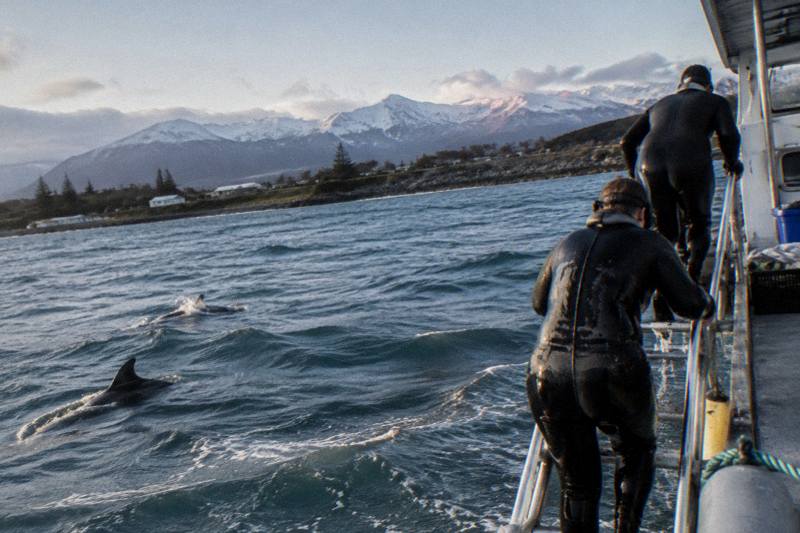
Can You See Dolphins From The Shore In Kaikoura?
Dolphins are present off Kaikoura all year, but shore sightings depend on where the pods are that day. This guide explains what is realistic from land and when a boat tour earns its price.
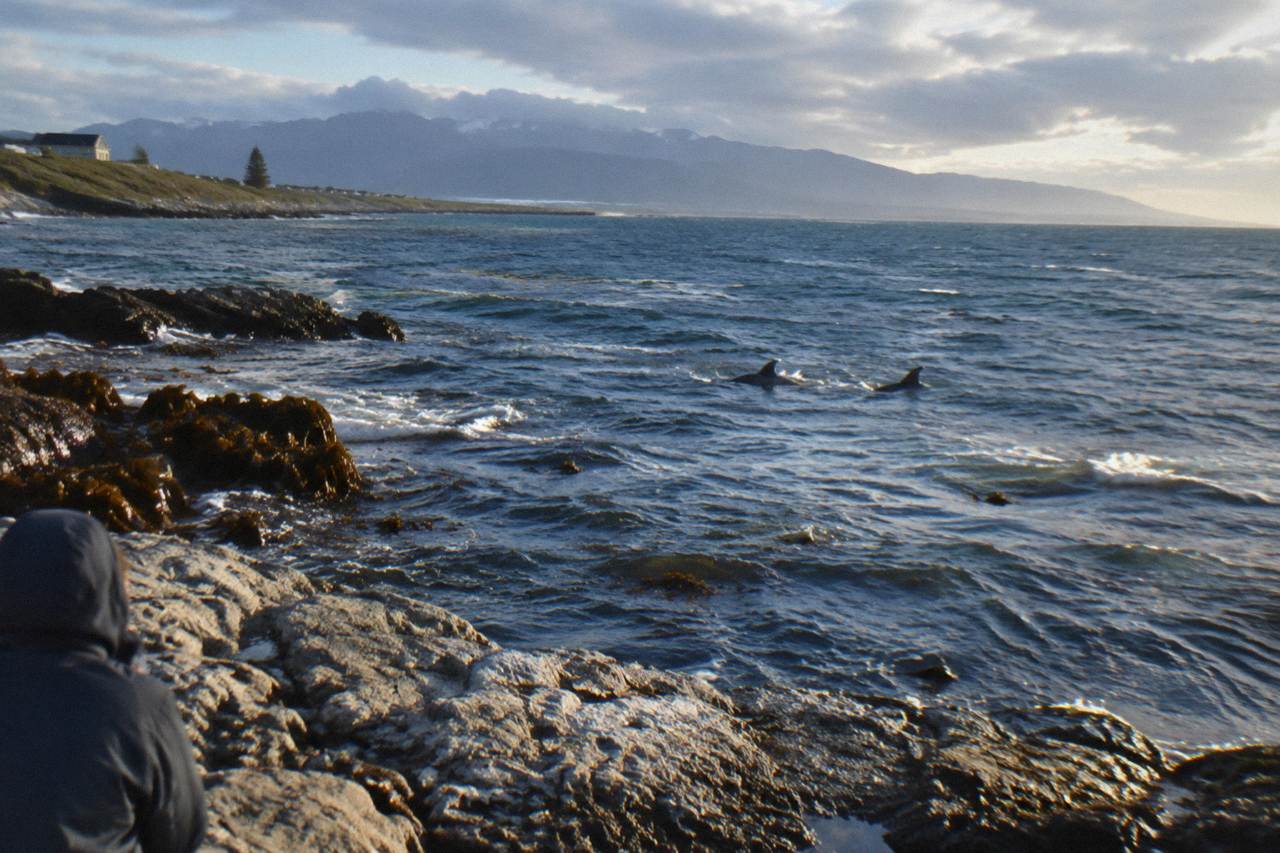
Yes, sometimes. The Department of Conservation says groups of several hundred to over 1000 dusky dolphins are present at Kaikoura all year round, and the local boat operator says that from October to May they move inshore in the early morning to the southern side of the Kaikoura Peninsula. Shore sightings happen, but nothing about them is promised, and the pods range further offshore in winter.
That is the honest core of the answer. Kaikoura is one of the few coastal towns in New Zealand where a resident dolphin population lives within sight of land, which is why the question gets asked so often. The animals are real, the numbers are real and the coastline genuinely overlooks their feeding grounds. What varies is the day.
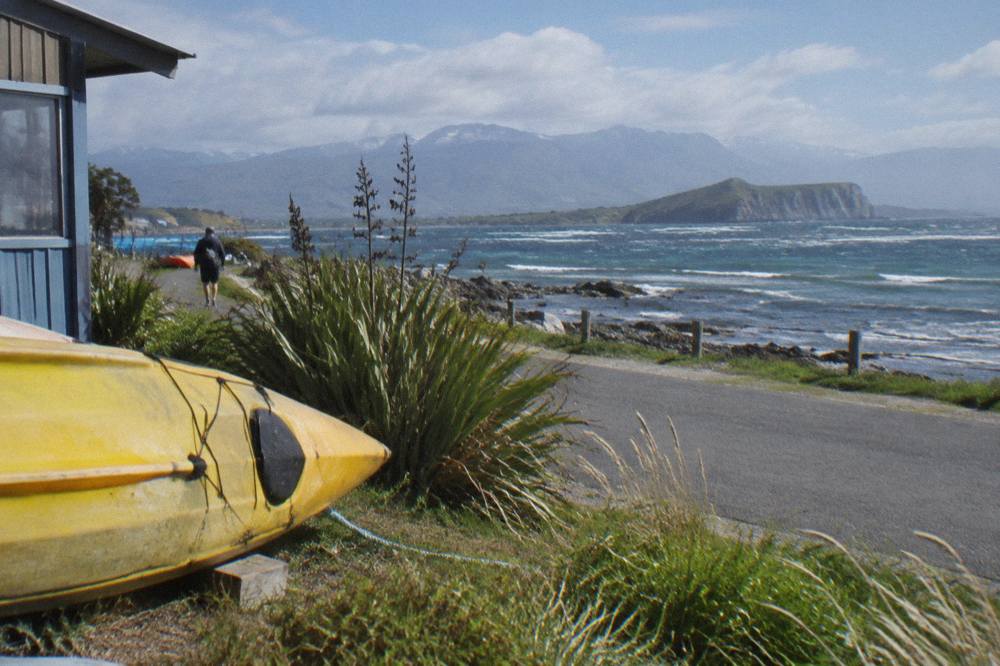
The pattern matters more than luck. Dusky dolphins are not evenly spread across the year. From October to May the operator reports they move inshore during the early morning to the southern side of the peninsula, which is when a patient watcher scanning the water has a reasonable chance of spotting splashes, dorsal fins or a pod milling near the surface. From June to September the same pods range further offshore over a greater area, and the odds from a shoreline drop sharply. A winter visitor hoping to see dolphins from dry land is asking the season for something it does not usually give.
No tour, operator or page can promise a shore sighting on any given day, and this site will not either. The dolphins are wild animals following food, and the Department of Conservation manages Kaikoura's marine tourism precisely because the wildlife here is abundant but never scheduled. The realistic framing is this: the shore gives you a free, weather-dependent chance at a distant view, while a boat gives you a closer, guided encounter built around where the pods actually are that morning.
That distinction drives everything else on this page. A reader who is content with a maybe can enjoy the coast for nothing.
Which Dolphins Live Around The Kaikoura Peninsula?
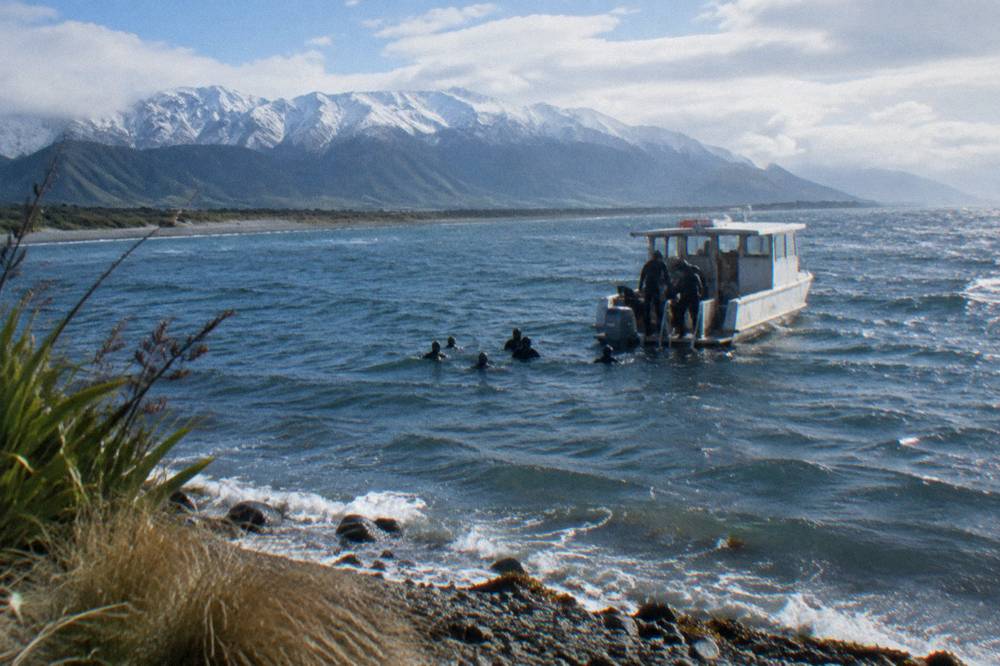
Two species matter. Dusky dolphins, in groups of several hundred to over 1000, are present at Kaikoura all year round according to the Department of Conservation, and they are the focus of every dolphin boat outing sold here. Hector's dolphins, a Nationally Vulnerable endemic species with about 15,000 individuals older than a year, also use close coastal waters around the peninsula and nearby beaches.
The duskies are the headline act. Their pod sizes are extraordinary by any standard, and Kaikoura's submarine canyon, which lies close to the coast, supports the feeding that keeps them there through every month of the year. DOC notes the pods move further offshore in winter and that calving runs from November to mid-January, so the dolphins a boat finds in December may include mothers with very young calves, which carries its own protections under the Marine Mammals Protection Regulations 1992. Under those regulations swimming is not permitted with dolphin pods that have very young calves, a rule the boat crews work within.
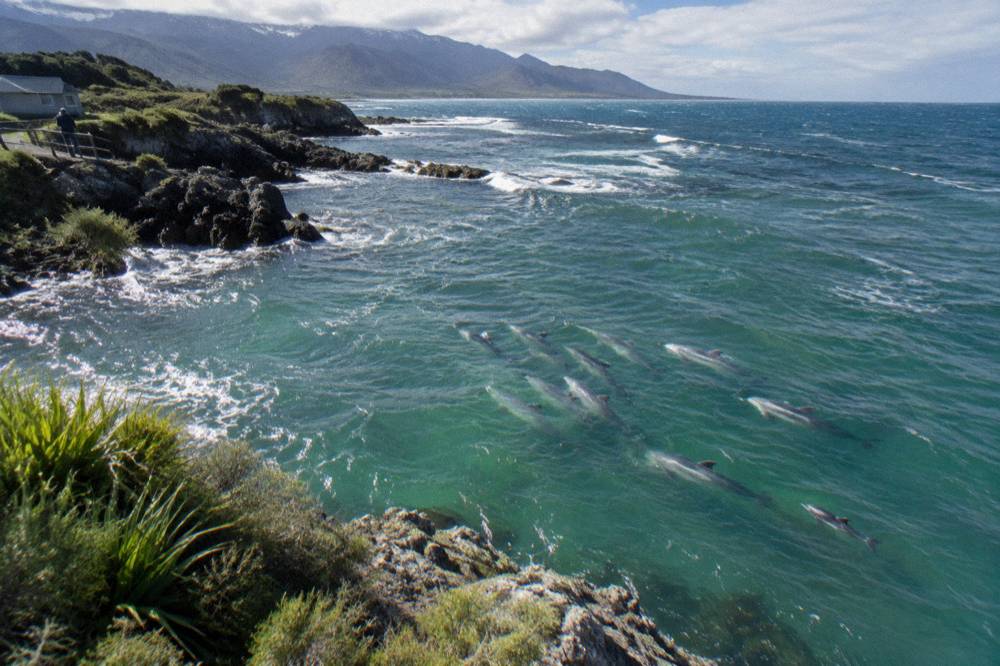
Hector's dolphins are the quieter story. DOC lists them as endemic to New Zealand, mostly around the South Island, and the local operator describes them as not uncommon around the Kaikoura Peninsula and the beaches either side of it. They favour close coastal waters, which in theory makes them a shore-watching candidate, but they are not the focus of the tours and no Kaikoura pod size or season is published for them. A sighting from a beach would be a genuine bonus rather than a plan.
Neither species performs to a timetable. What the shore offers is a window onto a working marine ecosystem: dolphins that may or may not be near the coast that morning, seabirds working the same water, and the possibility of whale blows further out. For many visitors that possibility is a pleasure in itself. For visitors whose heart is set on dolphins, the boat is the honest answer.
What Time Of Day Are Shore Sightings Most Likely?
The operator says dusky dolphins move inshore in the early morning from October to May, reaching the southern side of the Kaikoura Peninsula, so that window is the strongest shore-watching period the published information supports. In winter, June to September, the pods range further offshore and no time of day reliably brings them within view of land.
Early morning is the phrase doing the work in that answer. It is the only timing pattern the operator publishes about inshore movement. Whale Watch Kaikoura says DOC restricts dusky dolphin viewing from 11.30 am to 1.30 pm from November to March because that is a rest period for the animals, which tells a shore watcher that the middle of the day is not when the action happens.
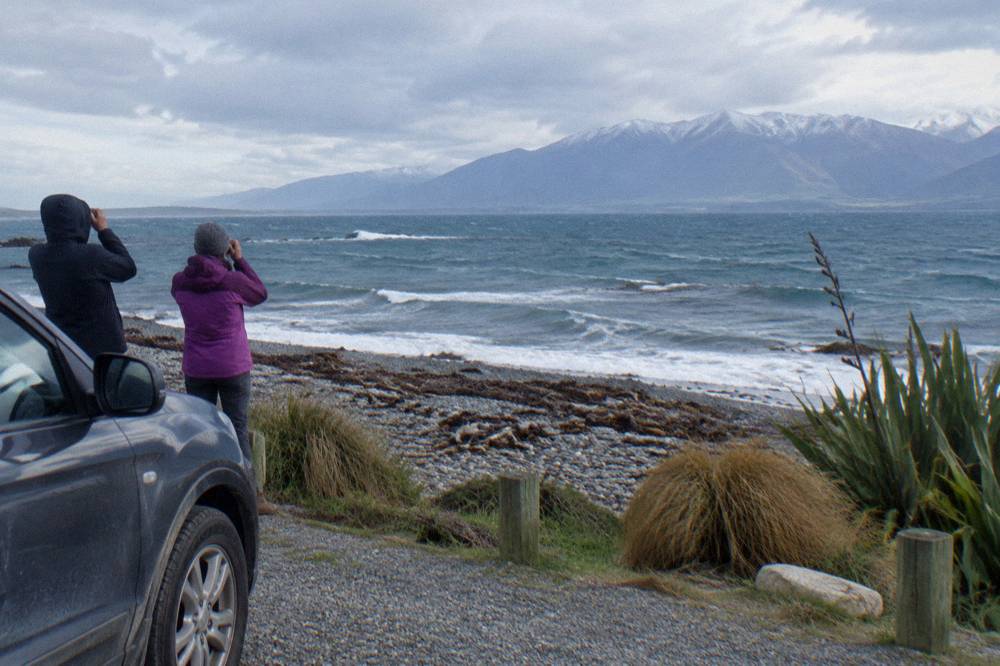
A practical shore-watching session, for anyone who wants to try it, looks like this: pick a morning between October and May, choose a stretch of coast with a wide view of open water, allow an hour or more of patient scanning, and treat any dolphins as a gift rather than an entitlement. Binoculars help. So does lowering expectations about distance, because even an inshore pod is usually well beyond the water's edge, and "several hundred dolphins" spread across a bay can look like scattered whitecaps.
This is also where Kaikoura Dolphin Tours has to be straight with readers: the shore question is usually asked by people who would secretly love to see dolphins properly. The boat exists precisely because shore sightings are unreliable. A dolphin watching day trip puts a crew on the water whose whole morning is spent locating the pods, and the difference between a distant fin and a pod swimming past the hull is the difference between the free option and the paid one. The guide to dolphin watching tours in Kaikoura covers those options in detail.
How Much Better Is A Boat Tour Than Watching From Land?
A boat closes the distance entirely. Instead of scanning from the shore and hoping the pods come in, a dolphin watching tour travels to wherever the dolphins are feeding that day, with a crew, safety gear and local knowledge. The trade is cost, time and a commitment to the operator's schedule rather than your own.
The cheapest way onto the water with dolphins on this site is the Cheeky Kea dolphin watch day trip, "Dolphin Encounter, Meal Included", from $217 per person. It is a 10 hour day trip starting in Christchurch with pickup points in the city, lunch is included, it is rated 4.3 across 15 reviews, and it offers a full refund if cancelled up to 24 hours before the start. The dolphin boat outing is bundled inside the day trip: the coach handles the roughly 2.5 hour drive north, and the boat handles the dolphins. For a visitor based in Christchurch without a car, that single booking solves the whole problem.
The swim option costs more and asks more. The Leisure Tours 12 hour swim day trip, from $283.14 per person, rated 4.5 across 29 reviews, includes the dolphin swim, a wetsuit and snorkel, Christchurch hotel pickup, a minimum age of 8 and a group capped at 16. Lunch is excluded on that one. Swimmers on that trip need to be confident swimmers, because the dolphins are met in open water, not a pool. The cancellation window is also longer: a full refund applies only if cancelled at least 6 full days before the start, with a 50% refund between 2 and 6 full days.
| Tour | Operator | From (USD) | Duration | Format | Lunch | Free cancellation |
|---|---|---|---|---|---|---|
| Dolphin Encounter, Meal Included | Cheeky Kea Tours | $217.00 per person | 10 hours | Watch, boat | Included | Full refund up to 24 hours before |
| 12-Hour Dolphin Swim Day Trip | Leisure Tours | $283.14 per person | 12 hours | Swim, boat | Not included | Full refund 6 full days before |
| Whale Watch Kaikoura Boat | Whale Watch Kaikoura | $101.85 per person | 3 hours 30 minutes | Watch, whales | Not stated | Full refund up to 24 hours before |
The third row is the reminder that dolphins are not the only draw. The Whale Watch Kaikoura boat, the most reviewed tour on this site at 4.5 across 3,057 reviews, starts at its base on Whaleway Station Road rather than in Christchurch, spends up to 2 hours 30 minutes of its 3 hours 30 minutes on the water, and asks passengers to arrive 30 minutes before departure. Whale Watch Kaikoura says over 90% of its tours find whales and it refunds 80% of the fare if none is seen, a promise that belongs to that operator alone. Dolphins are often encountered on the same water, but whales are the product.
Can You Combine Shore Watching With A Tour On The Same Trip?
Yes, and it is the sensible way to do Kaikoura. The day trips run 10 to 12 hours door to door, which leaves time around the boat outing itself, and the coast between outings is exactly the kind of open-water shoreline where an early morning pod can pass. Watching from shore becomes the free bonus layered on a booked tour rather than the whole plan.
Day trippers from Christchurch spend roughly 2.5 hours on the road each way. That coastline is the same water the duskies use when they come inshore. A visitor who wakes early, walks a stretch of shore before check-in, and scans the sea for ten minutes has spent nothing and lost nothing, and on a good October to May morning the payoff can be a pod working the southern side of the peninsula. The same visitor then boards a boat, or has already boarded one, and gets the close view the shore could not give.
Seals are the other reliable shoreline presence, and DOC asks visitors to keep at least 20 m from fur seals hauled out on shore, with no loud noise, no feeding and no touching, because disturbed mothers can abandon pups. Kaikoura is a stronghold for seals and the kekeno is a taonga species for Ngati Kuri and Te Runanga o Ngai Tahu. For anyone who wants more than a shoreline look, Seal Swim Kaikoura, meeting at Gooches Beach on the Esplanade, runs a 2.5 hour swim from $101.57 per person, rated 5.0 across 284 reviews, wetsuit included, minimum age 12, with the operator offering a 50% refund or a second tour if no seals are seen in the water.
How Do You Get To Kaikoura For A Dolphin Tour?
Most dolphin day trips start in Christchurch, and the drive north takes about 2.5 hours each way on a route operators run daily. Kaikoura sits roughly midway between Christchurch and Blenheim, so it also works as a stop on a longer South Island itinerary, and a seasonal coastal train offers a car-free alternative between September and April.
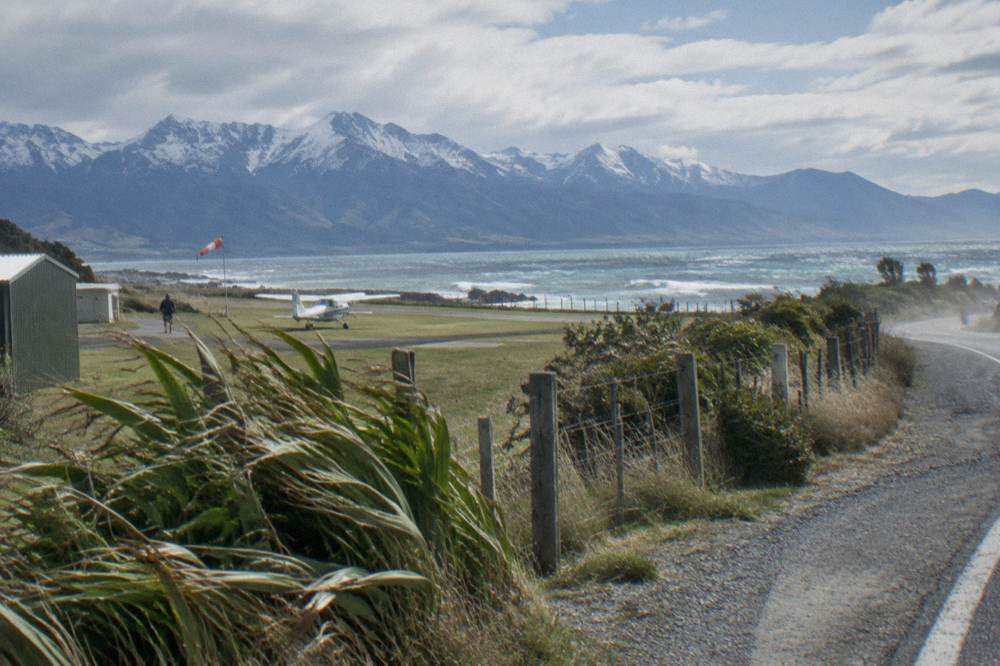
Nine of the tours on this site start in Christchurch, including every dolphin product, because Kaikoura's dolphin boat sells direct only and the bookable day trips bundle it with coach transport. Six of those tours state hotel or pickup-point collection in Christchurch, which removes the driving question entirely for those rows. Visitors already staying in Kaikoura instead start from the local bases: the dolphin and whale boats from their own bases, the flights from Peketa airfield, and the kayak and seal tours from points around the township.
The road deserves one caution. State Highway 1 south of Kaikoura was damaged by storm flooding in July 2026, so the sensible habit is checking the NZTA journey planner on the day of travel rather than assuming a fixed arrival time. Day trip operators monitor conditions on every departure, and their coaches are the reason many visitors never have to think about the route at all.
The train is the scenic option. The Coastal Pacific, run by KiwiRail, is a daily seasonal service from 1 September to 30 April, not running on Christmas Day, linking Christchurch, Kaikoura, Blenheim and Picton, with fares on the KiwiRail site. It suits travellers weaving Kaikoura into a wider itinerary rather than a same-day tour turnaround. For the regulations that protect the animals all these journeys lead to, DOC summarises the Marine Mammals Protection Regulations 1992 on its marine mammals pages, including the 300 m speed limits and the ban on swimming with whale pods.
Should You Plan A Trip Around A Shore Sighting?
No. Shore sightings at Kaikoura are a genuine possibility, backed by an all-year dolphin population and a documented inshore pattern from October to May, but they are not a plannable event. Build the trip around a booked dolphin watching tour and treat anything seen from the coast as an unplanned bonus, and the day delivers either way.
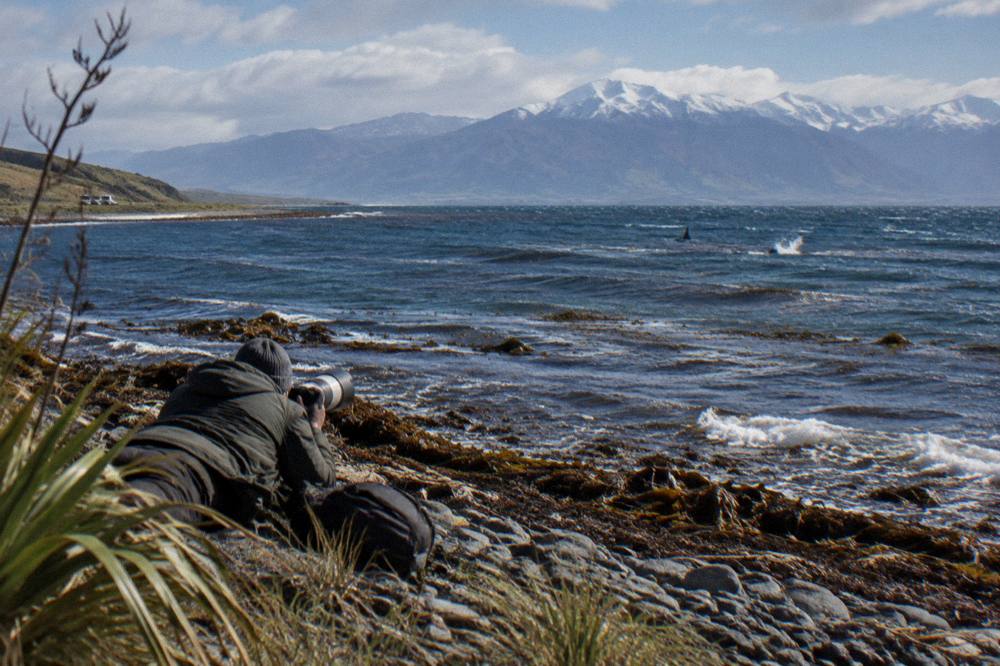
The psychology matters here. Visitors who plan a whole day around a free shoreline watch often leave disappointed, because the odds, while real, are not in anyone's control. Visitors who book a tour get a boat on the water, though no tour guarantees a sighting, and the operator's own terms define what happens if the boat cannot sail. The Cheeky Kea watch trip from $217 per person, with lunch and Christchurch pickup included, is the cheapest dolphin day trip on this site and the natural first choice for a shore-curious reader who wants a closer look. The swim option from $283.14 adds the water itself.
There is a middle path worth naming: watch from shore on the morning you already have, and book a tour for a later day. Kaikoura rewards lingering. The seals, the albatross, the whale boats and the flights all operate from the same compact coastline, and the Kaikoura tours compared guide lays out the full spread of formats and prices side by side. A visitor who spends two days here can watch from the beach for free on day one and be on the water on day two.
Whatever the choice, keep the wildlife rules in mind from the sand as much as from the boat. DOC's distance guidance, speed limits and calf protections exist because Kaikoura's abundance depends on the animals tolerating the attention. The shore watcher scanning for fins is part of the same bargain as the swimmer in a wetsuit. The guide to Kaikoura dolphin swim vs dolphin watch works through that choice in full.
Common Questions About Dolphins From The Shore In Kaikoura
Can You See Dolphins From The Shore In Kaikoura?
Sometimes, yes. Dusky dolphins are present off Kaikoura all year in groups of several hundred to over 1000, and from October to May they move inshore in the early morning to the southern side of the peninsula. In winter they range further offshore, and no sighting from shore is ever promised.
What Time Of Day Is Best For Seeing Dolphins From Shore?
The early morning, between October and May, is the window the operator identifies for inshore movement. From 11.30 am to 1.30 pm, November to March, DOC restricts dusky dolphin viewing because the animals rest, so the middle of the day is the weakest time.
Which Dolphins Can You See From Kaikoura's Beaches?
Dusky dolphins are the resident species the tours follow. Hector's dolphins also use close coastal waters around the peninsula and nearby beaches, but they are not the focus of the tours and no local pod size or season is published for them.
Is Watching From Shore As Good As A Boat Tour?
No. The shore offers a distant, free, chance-based view, while a boat travels to where the pods are feeding that day with a crew whose job is finding them. The cheapest dolphin day trip on this site, the Cheeky Kea watch trip, is from $217 per person and includes lunch.
Can You See Seals From Kaikoura's Shore Too?
Yes, fur seals are a common shoreline presence and Kaikoura is a stronghold for the species. DOC asks visitors to stay at least 20 m from seals on shore, keep noise down, and never feed or touch them.
Do You Need To Be In Kaikoura, Or Can You Day Trip From Christchurch?
The drive from Christchurch takes about 2.5 hours each way, and every dolphin day trip on this site starts in Christchurch with the dolphin boat bundled into the itinerary, most with hotel or pickup-point collection stated.